


After eight months building the robot dog PawAI, I walk robot shows differently. I used to think “cool”; now there is only one question in my head: what can it actually do?
This year I went to two shows: Computex in early June, and the Taiwan Robotics and Intelligent Automation Show (TAIROS) at the Nangang Exhibition Center in late August. The short version:
- Fewer robots were actually moving than I expected. Many just stood on stage, or played a carefully chosen success video.
- Quadrupeds multiplied, but nearly all of them were for inspection and patrol, and they needed a pre-built map to move.
- Many booths used a system architecture almost identical to PawAI’s. The difference was not architecture; it was whether there was a concrete application.
All photos are mine from the show floor, with bystanders cropped out or blurred; the cover is an AI-generated illustration (Codex).
Computex: half selling compute, half selling a vision
First, what is Computex?
Computex (the Taipei International Computer Show) is co-organized by TAITRA and the Taipei Computer Association, and it is one of Taiwan’s biggest tech shows. This year it ran in early June across Nangang Exhibition Center Halls 1 and 2, TWTC Hall 1 and the Taipei International Convention Center, under the theme “AI Together”, with 1,500 exhibitors and 6,000 booths.1 It was also the first year Computex had a dedicated “AI Robotics” zone.2 Over the four days, the organizers counted more than 110,000 buyers.3

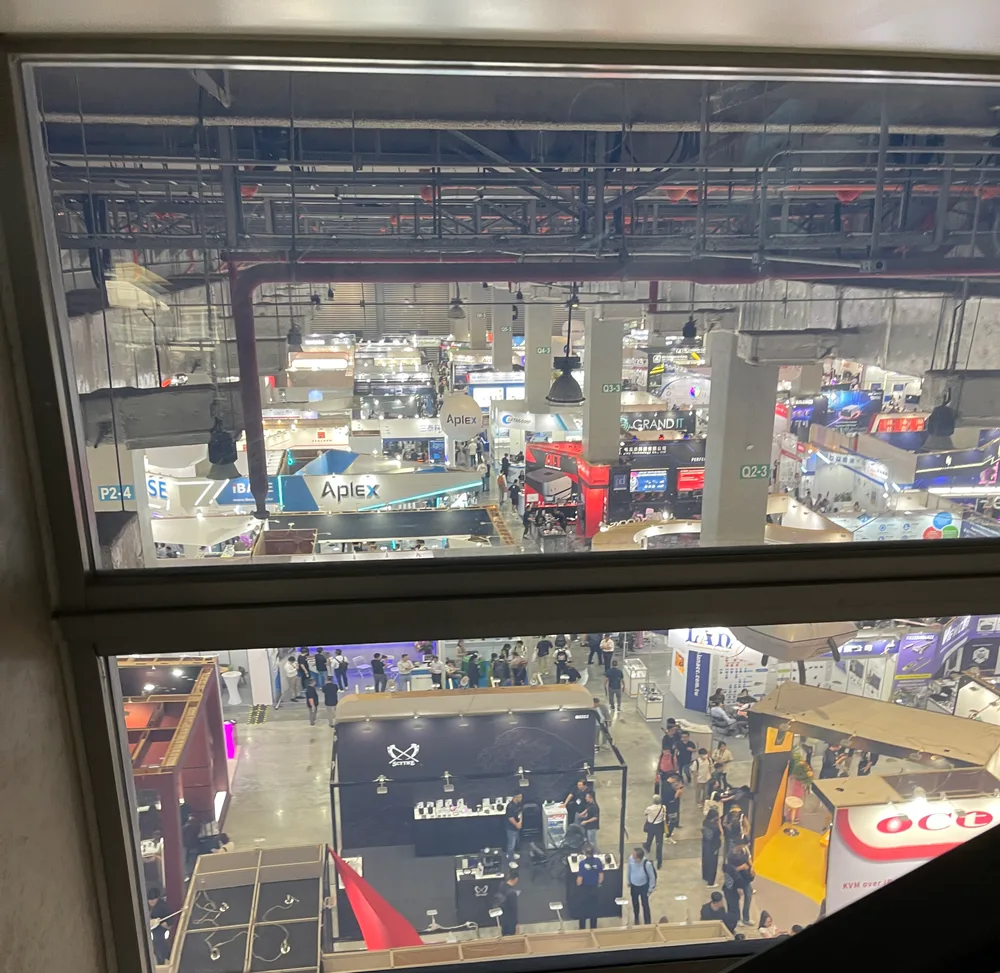
Left: the "AI Together" key visual above the registration counters. Right: Nangang Exhibition Center from upstairs, booths wall to wall.
I attended as an academic visitor. Before walking the floor, I gave myself one question: how far can these robots actually go?
First impression: more compute booths than robots
My first impression after one lap of Computex: booths selling components, racks and GPUs far outnumbered booths showing real applications.
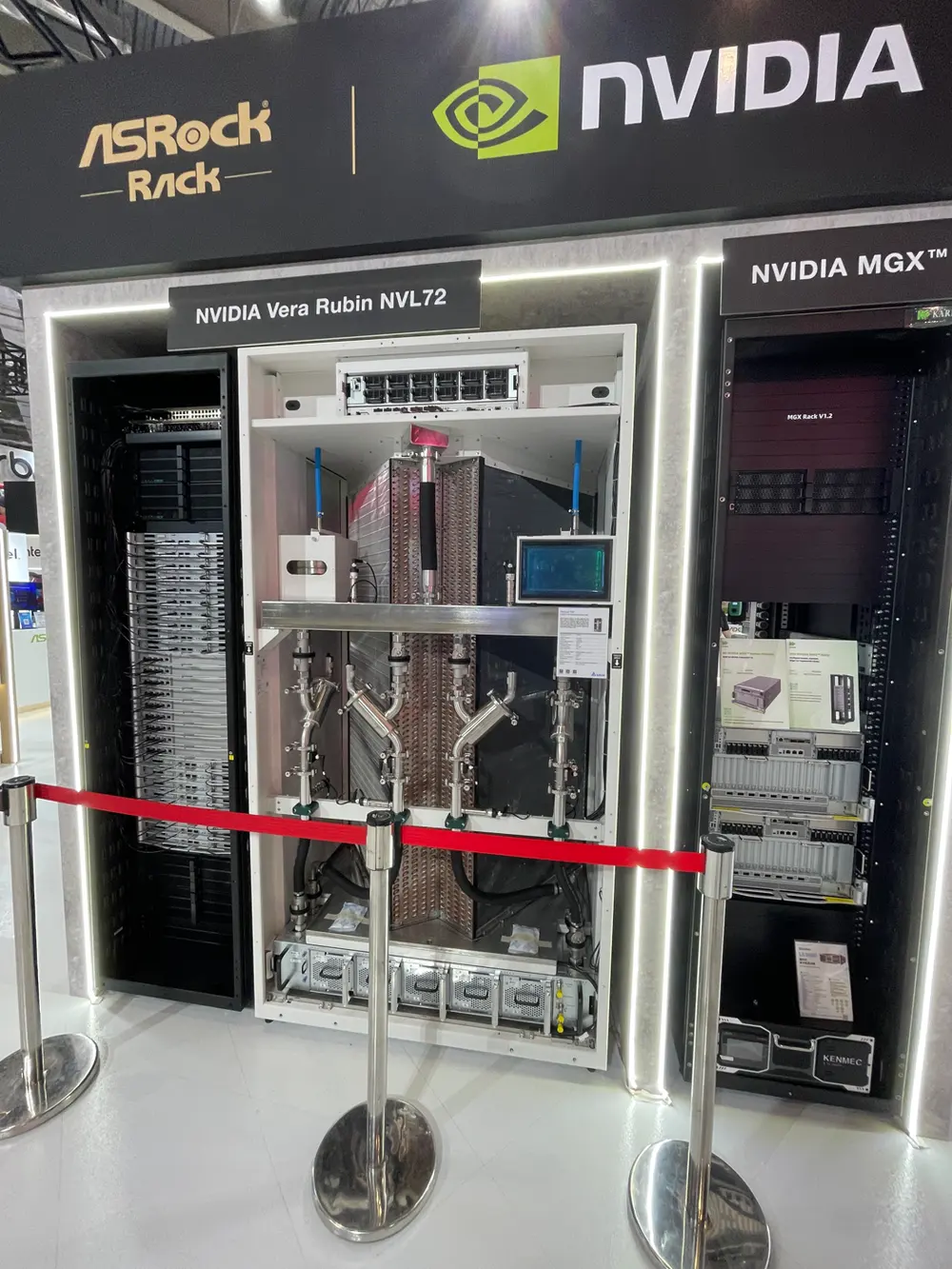
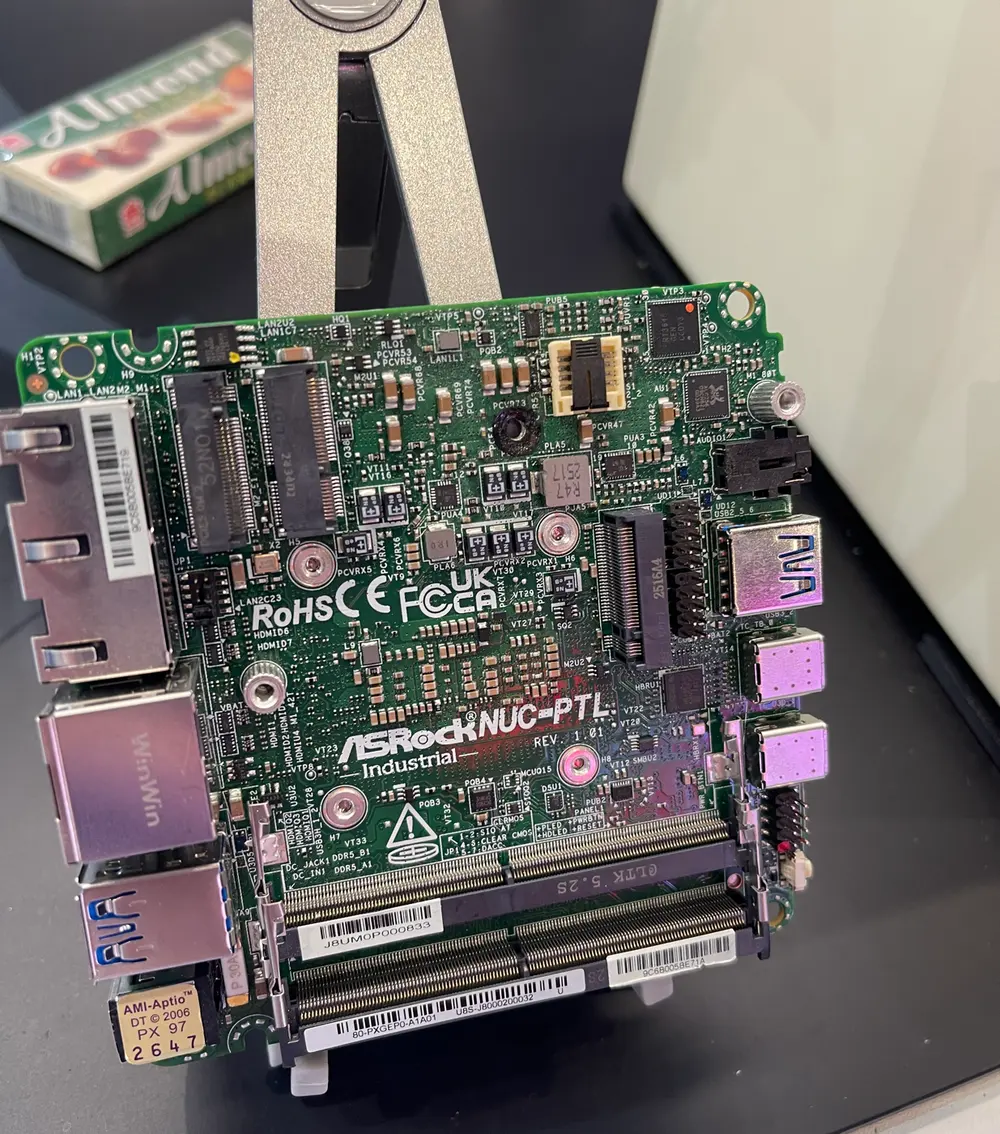
Right next to the robots: server racks and industrial boards everywhere.

The big vendors' booths were built like buildings, and what they pushed was still AI servers and development platforms.
The more advanced robot demos ran almost entirely on NVIDIA Thor. One booth connected a robot arm to a Jetson Thor developer kit and picked up blocks live:
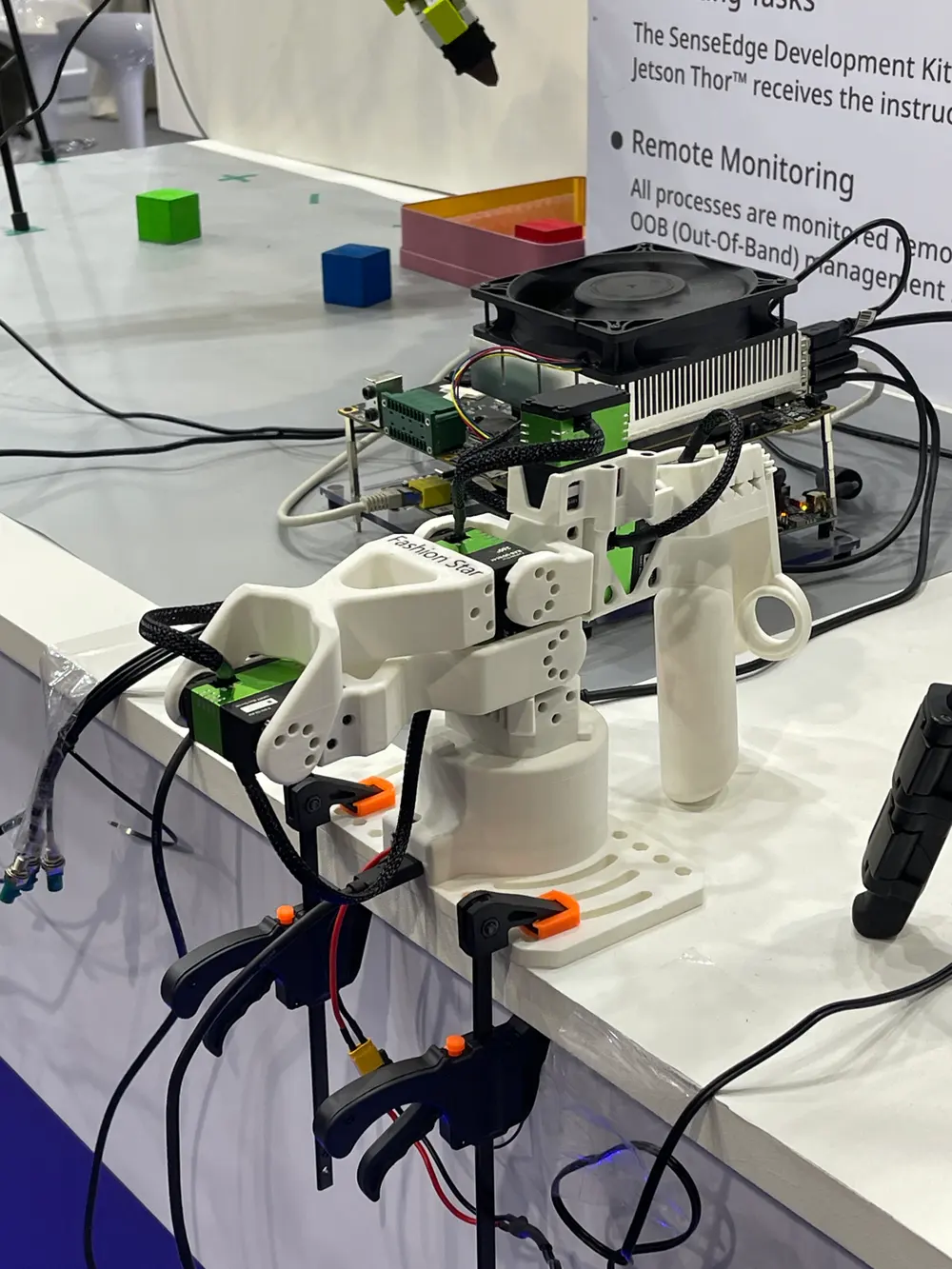
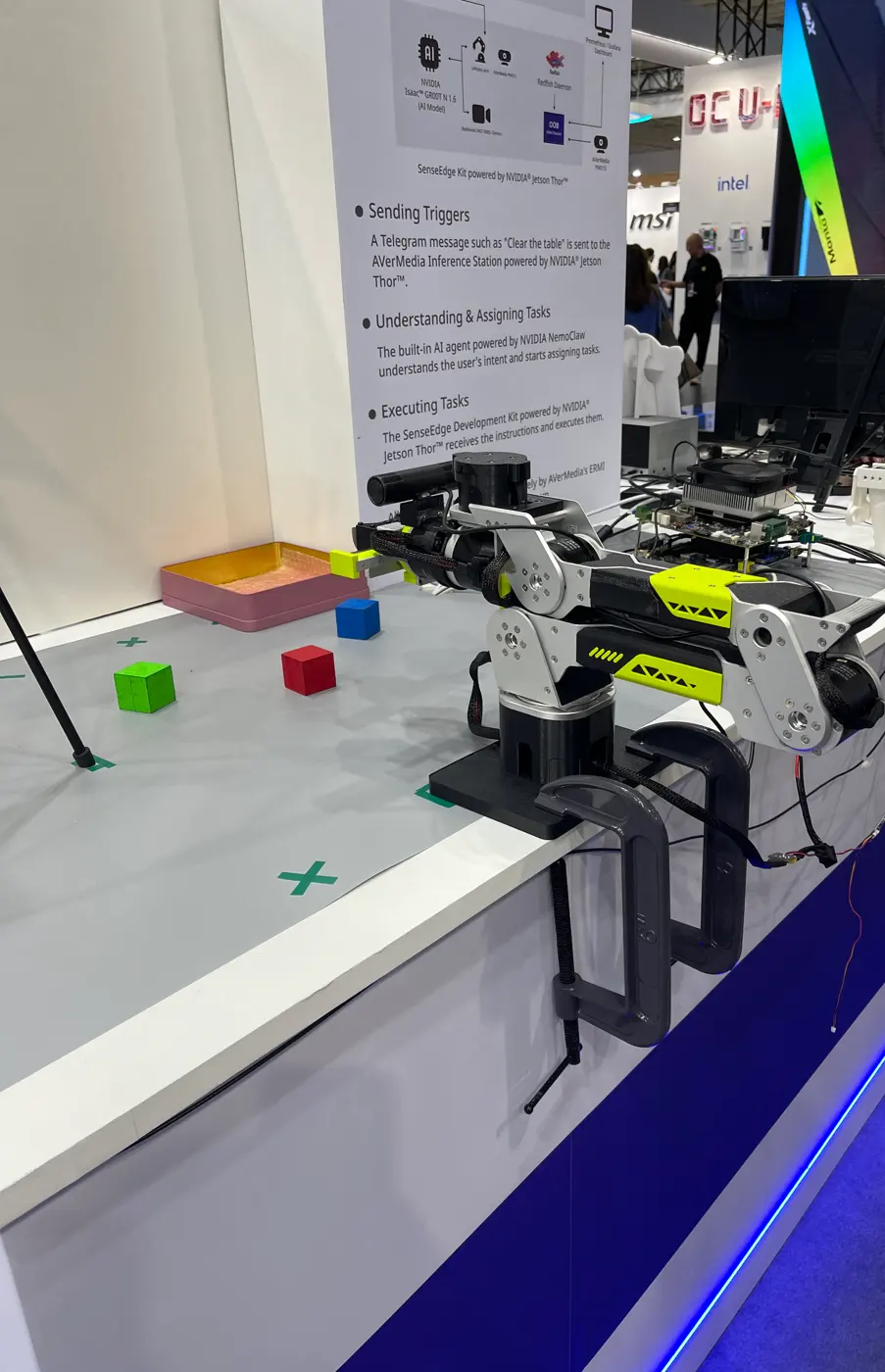
A tabletop arm and colored cubes: the most common "AI grasping" demo on the floor.
It reminded me of my own experience: PawAI ran on an 8 GB Jetson Orin Nano, and interaction plus navigation already could not run at the same time. One arm demo on the floor used a 128 GB board, and I estimate this kind of development needs at least 64 GB. It made one thing clear: for a robot to do many things at once, the compute gap is very real.
An architecture almost identical to PawAI
What hit me hardest was a small bipedal robot with two arms and two cameras that interacted with people through gesture and pose recognition. Its architecture was nearly the same as PawAI’s, with one extra “memory” feature; navigation was not demonstrated.
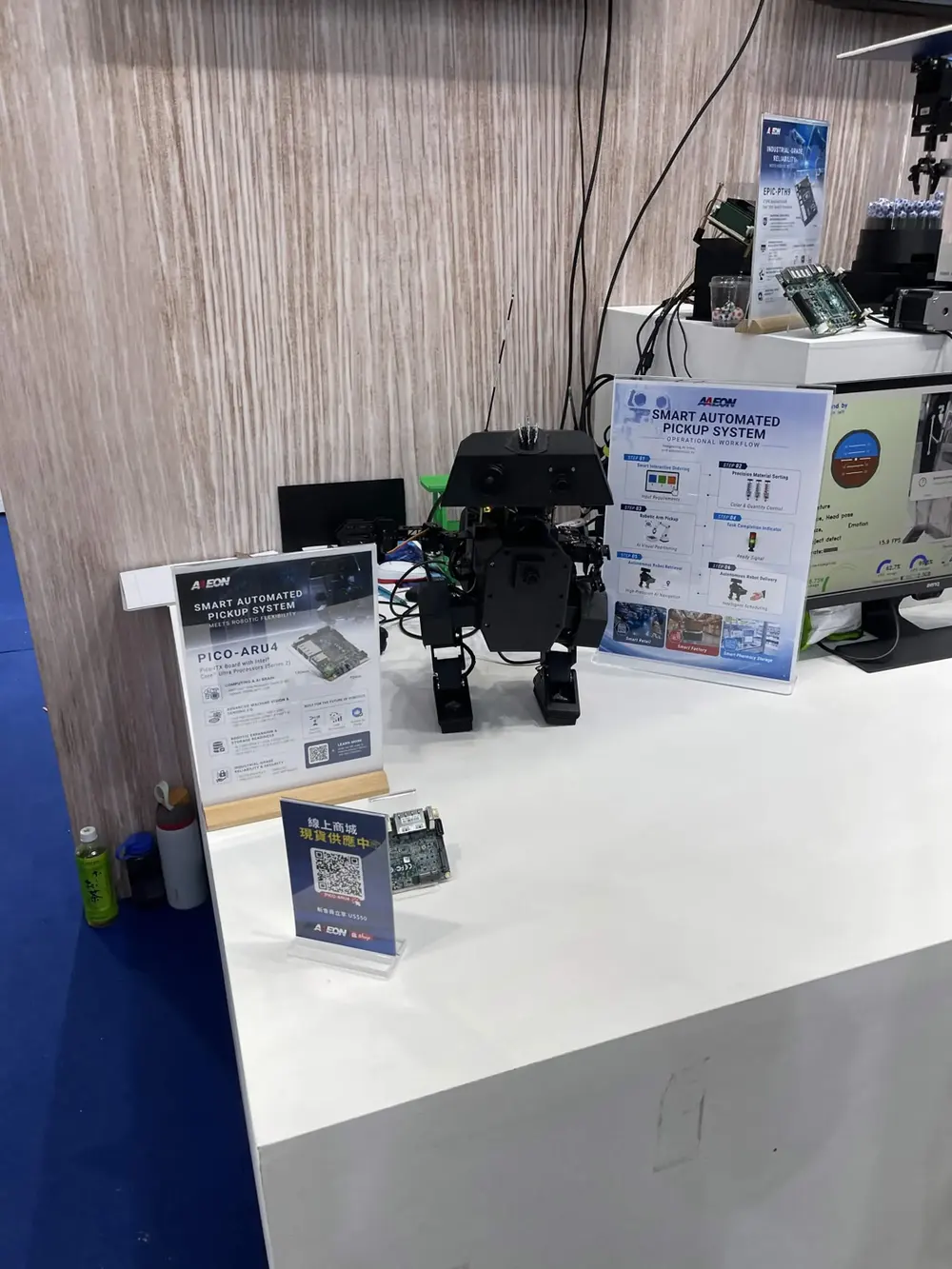
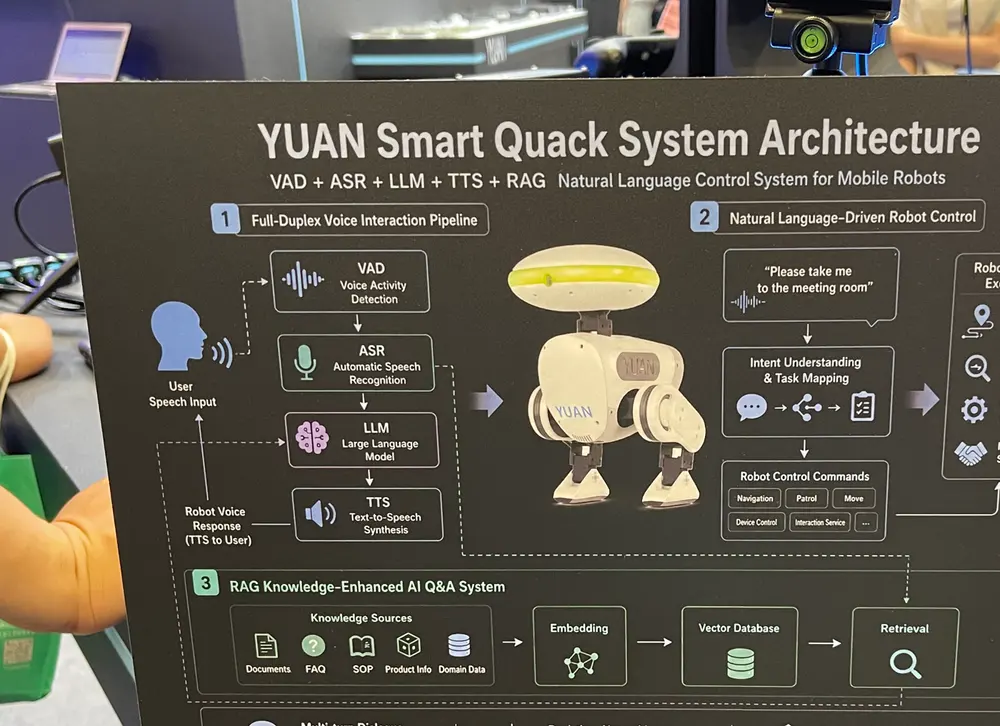
Left: a small biped with two arms. Right: another booth's architecture board, VAD, ASR, LLM, TTS plus RAG, which is essentially PawAI's voice pipeline.
The board on the right draws a mobile robot’s voice system as “detect speech → recognize it → language model → speak”, plus knowledge retrieval. That is nearly the exact pipeline I built for PawAI. Looking at it, I thought: the direction is right, but simply wiring these modules together is no longer anything special.
The same company had another wheel-legged robot, and its board laid out the whole architecture in more detail. I compared it with PawAI line by line:
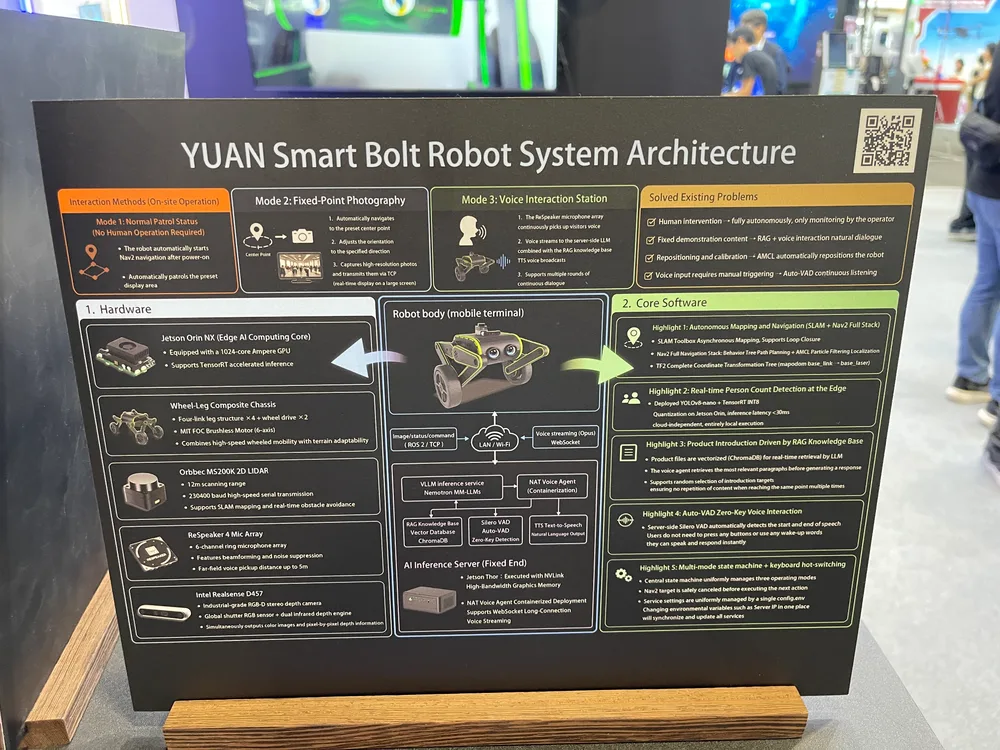
The robot itself runs a Jetson Orin NX; the large model runs on a separate Jetson Thor, connected over the local network.
| What the board says | What PawAI uses |
|---|---|
| Robot body: Jetson Orin NX | Jetson Orin Nano Super 8 GB |
| 2D lidar + SLAM Toolbox + Nav2 + AMCL | RPLIDAR A2 + SLAM Toolbox + Nav2 + AMCL |
| Intel RealSense D457 depth camera | Intel RealSense D435 depth camera |
| ReSpeaker 4-mic array + VAD | Onboard mic (later switched to a laptop mic) + VAD |
| YOLOv8n people counting | YOLO26n object detection |
| Large model on a nearby Jetson Thor | Speech recognition and LLM moved to a remote GPU |
Even “keep the large model off the robot” is the same. For PawAI, it was because the 8 GB board couldn’t run a good-enough model, so I eventually moved speech recognition and the LLM to a remote machine; this robot runs its large model on a Jetson Thor next to it.
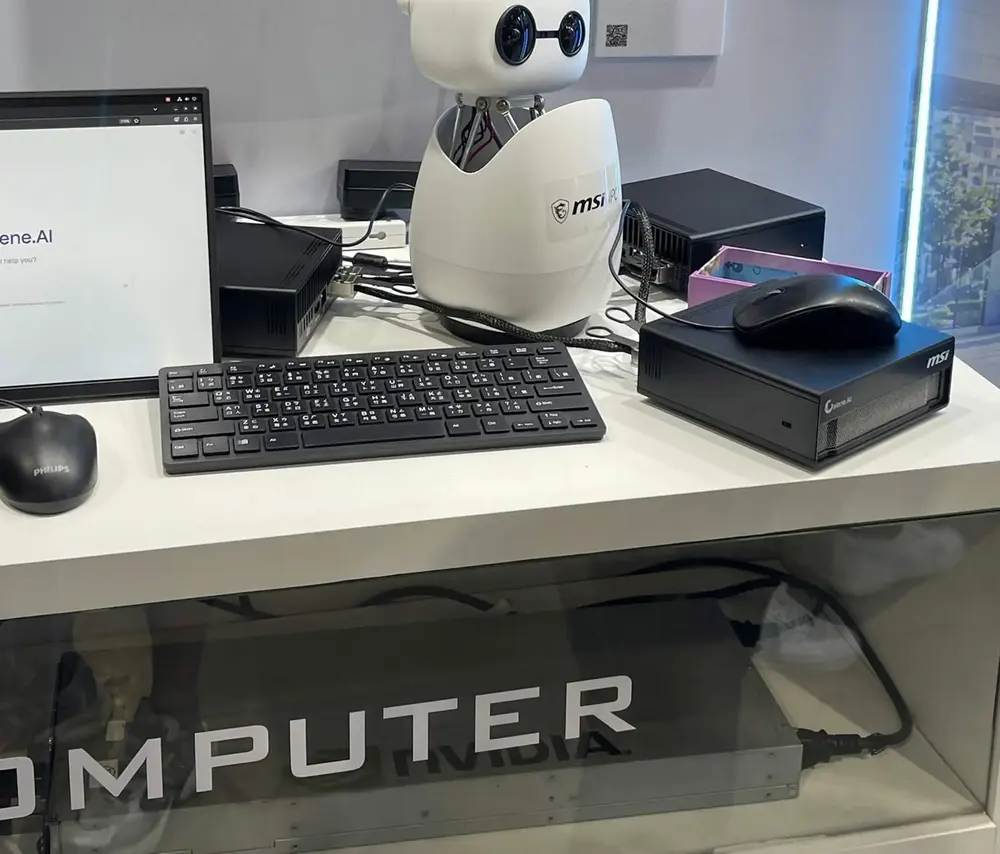
Reachy Mini, the open-source desktop robot from Pollen Robotics and Hugging Face, connected to a mini PC at this booth.[^reachy]
The demo that actually impressed me
The complete flow I remember most from Computex was a humanoid robot with a zoom camera on its head: it found a requested object, walked over and brought it back. From finding to fetching in one go, it was one of the few demos I saw run all the way through.
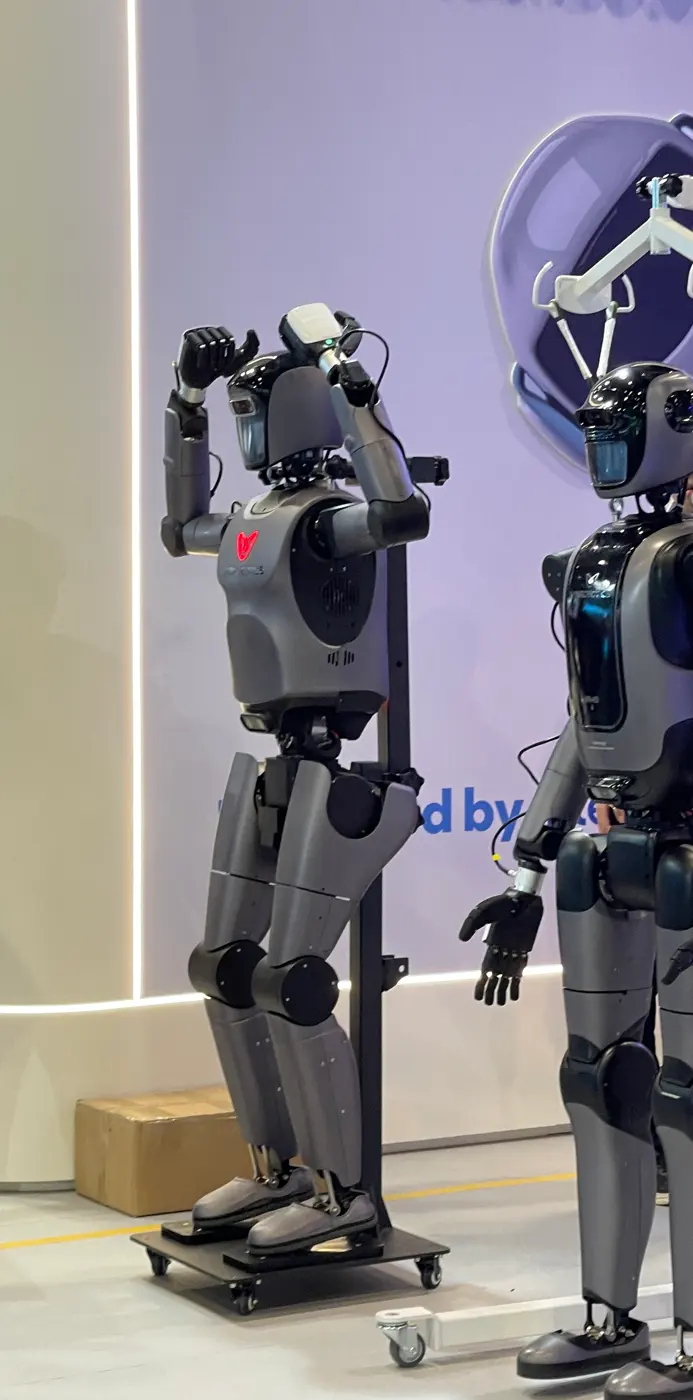
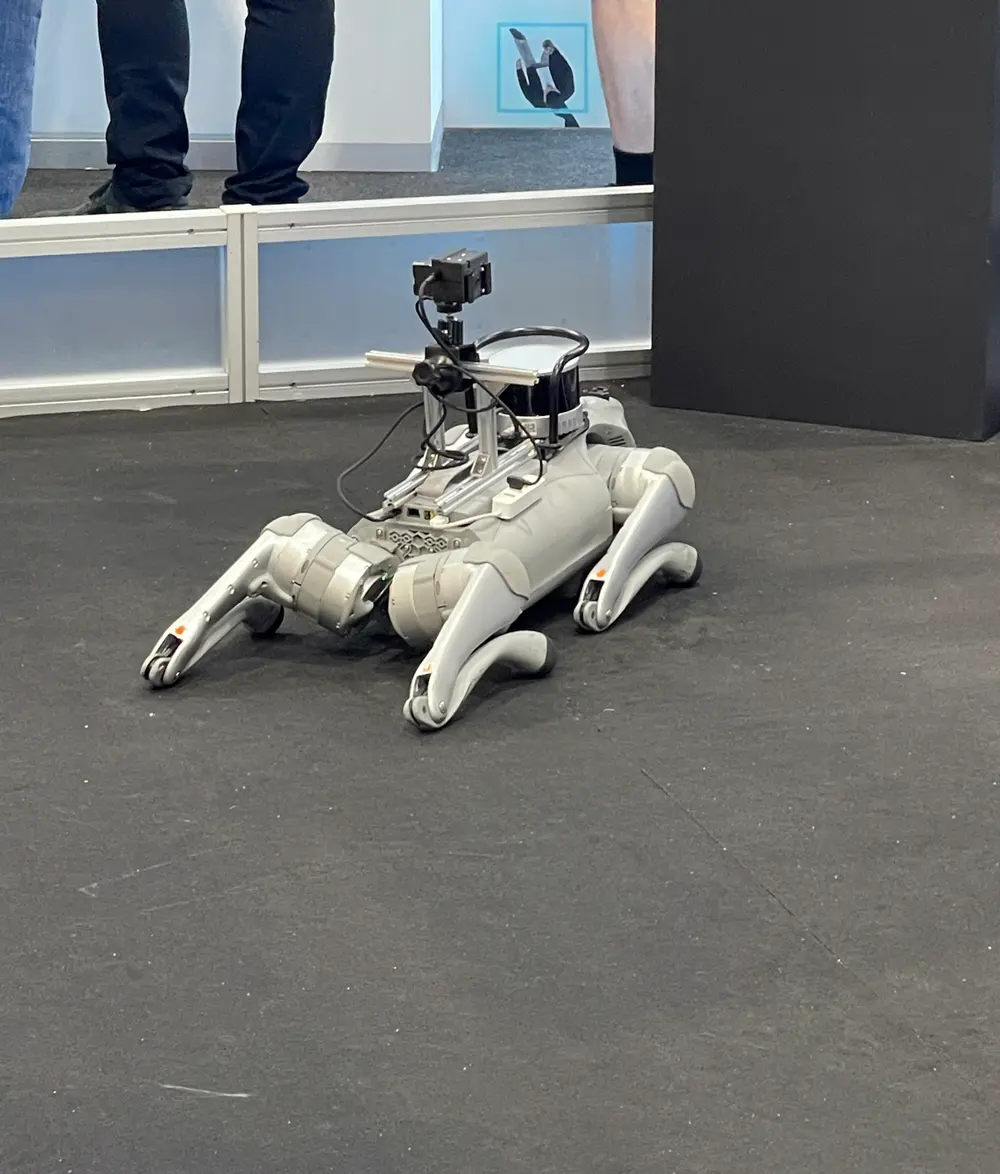
Left: humanoid robots on stage. Right: a quadruped carrying sensors. I counted more than ten Go2s at Computex alone.
Overall, Computex’s humanoids mostly showed factory work: moving boxes, sorting, polishing parts. Chatting, guiding visitors and basic interaction are things nearly every vendor can do now; they are no longer what sets anyone apart.
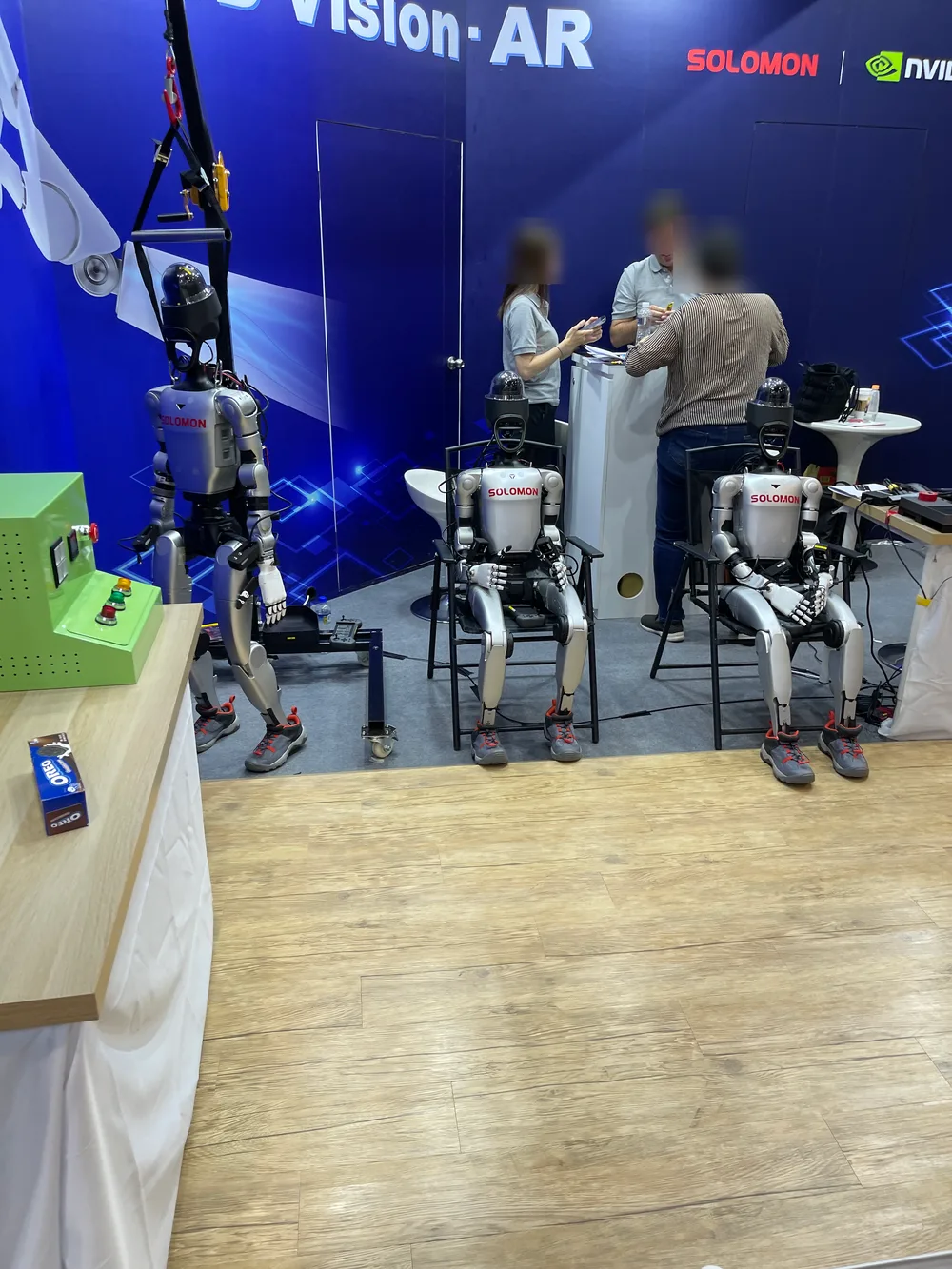
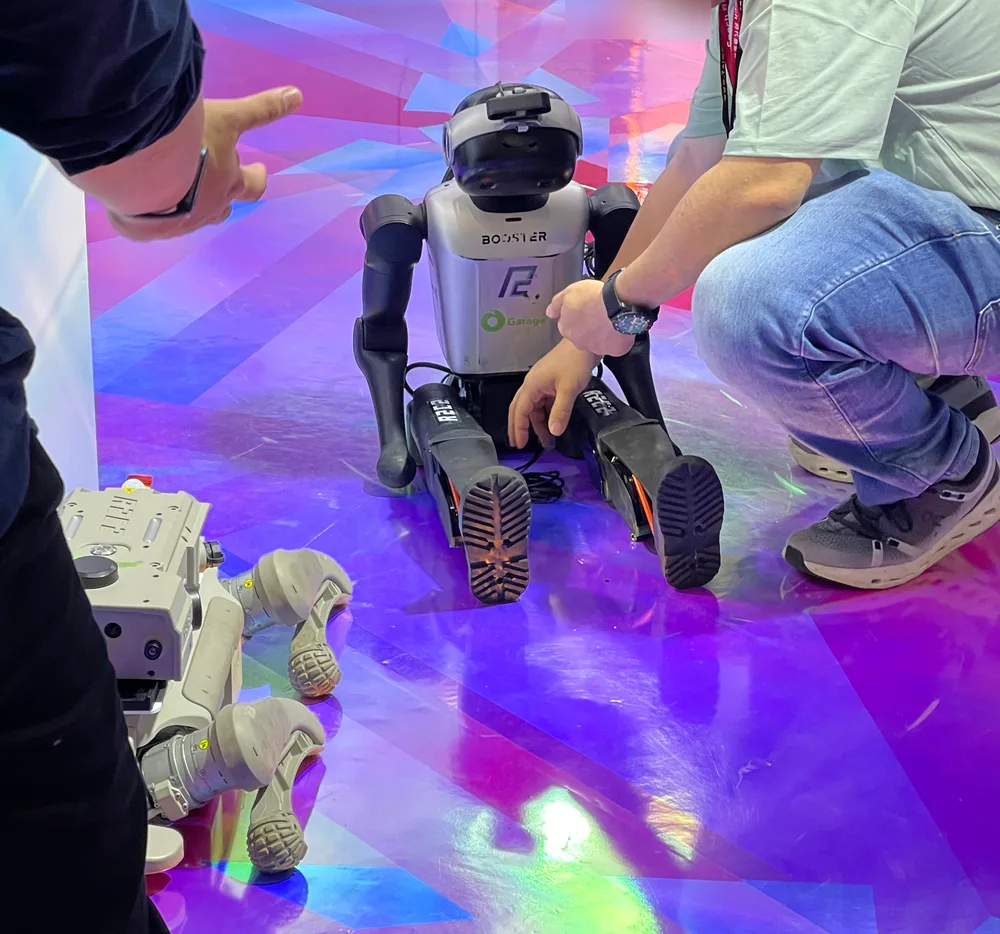
Left: one booth alone had three humanoids lined up. Right: a small humanoid sitting on the floor while a staff member crouches to adjust it.
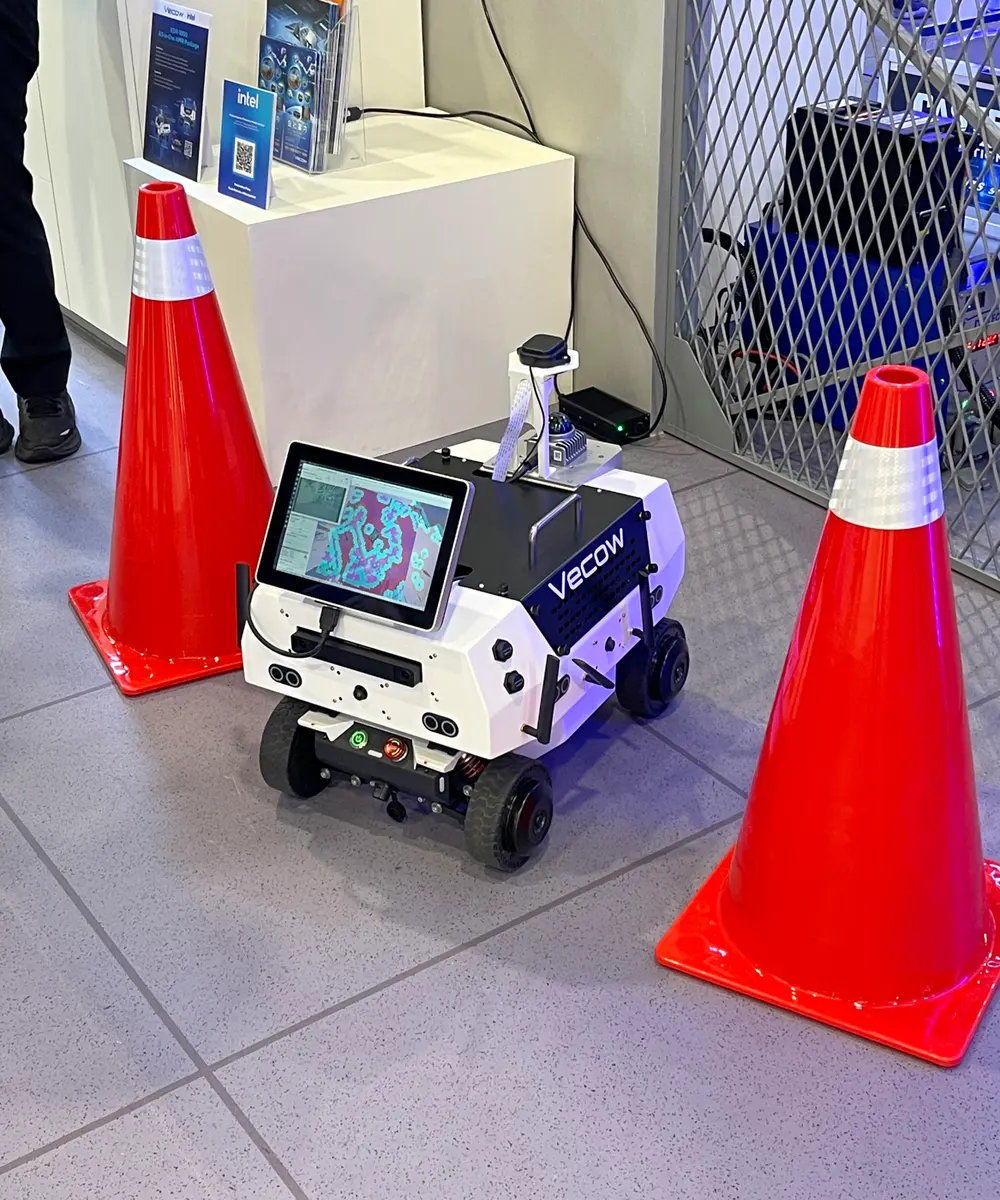
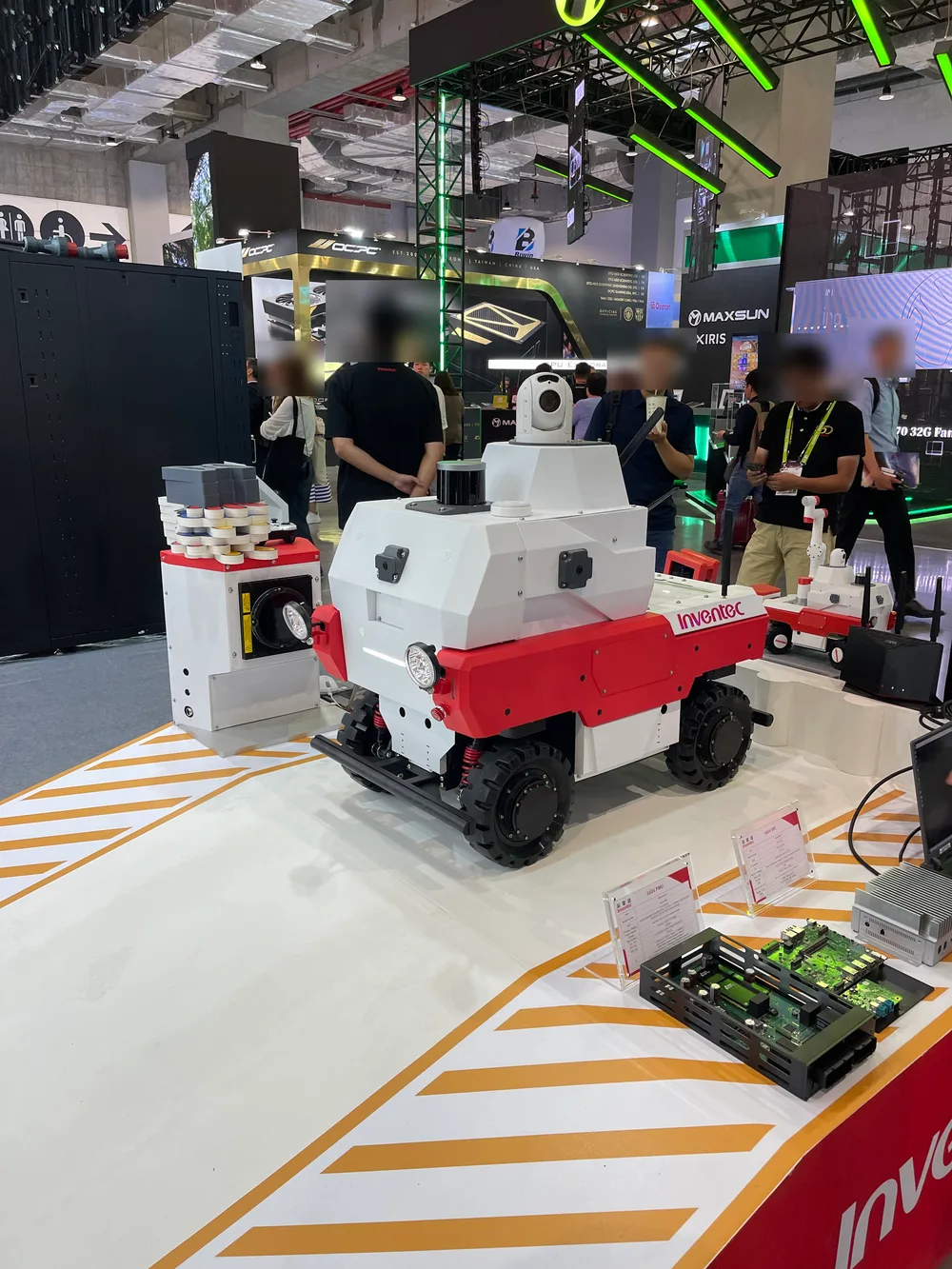
Wheeled mobile robots were another common sight: a service robot on the left, and one with cameras and sensors on top on the right.
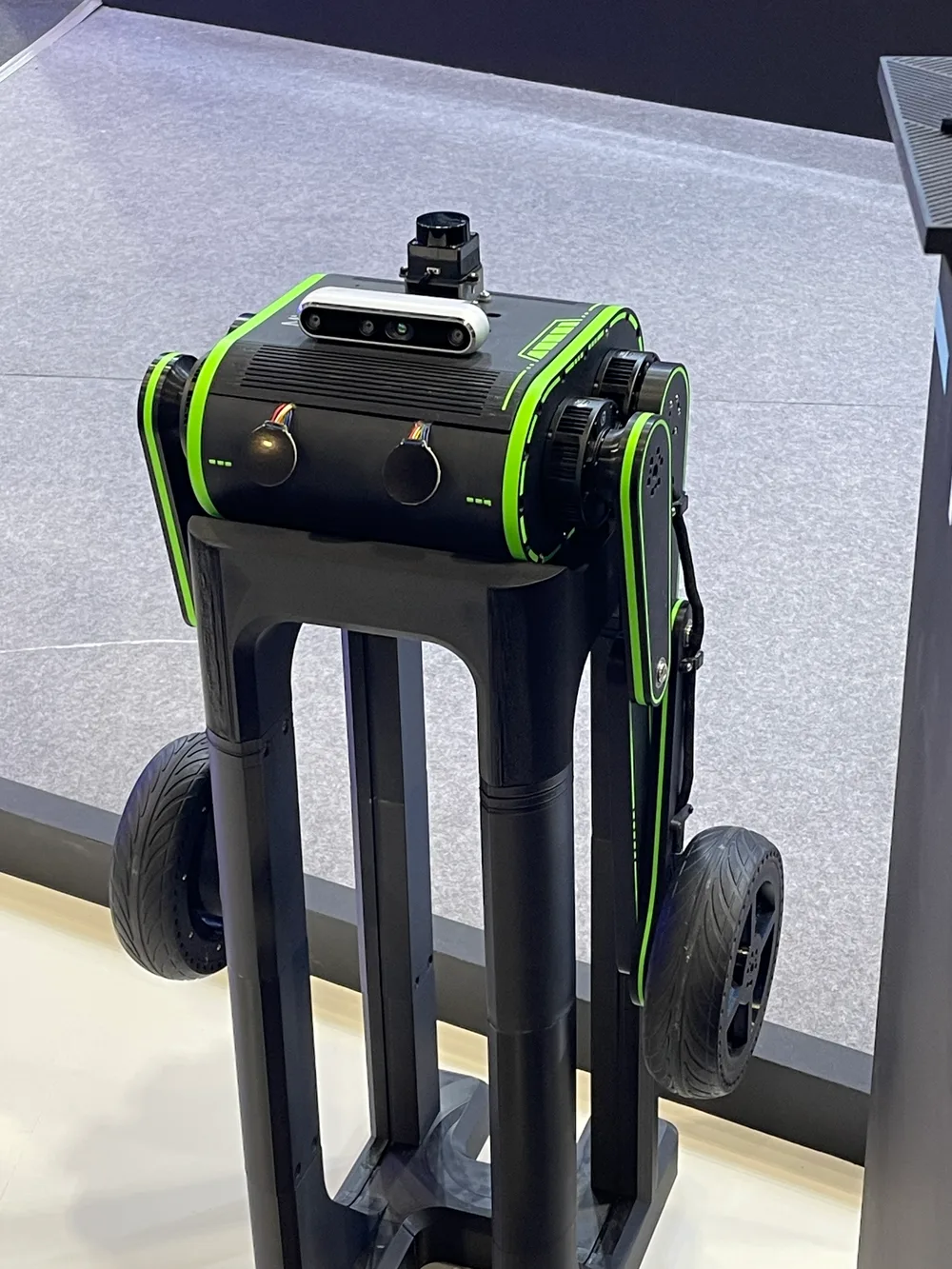
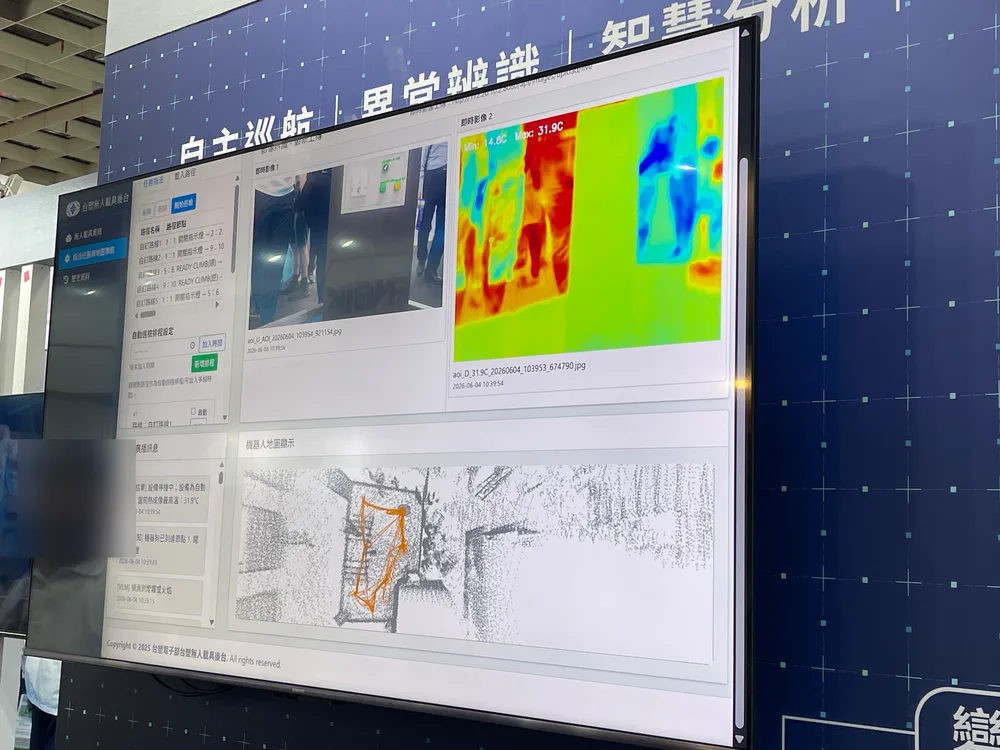
Left: a wheeled base with a depth camera and lidar. Right: an inspection system's screen, thermal images on one side and a point-cloud map with a patrol route on the other.
There were also gaming PCs built into robot-shaped cases:
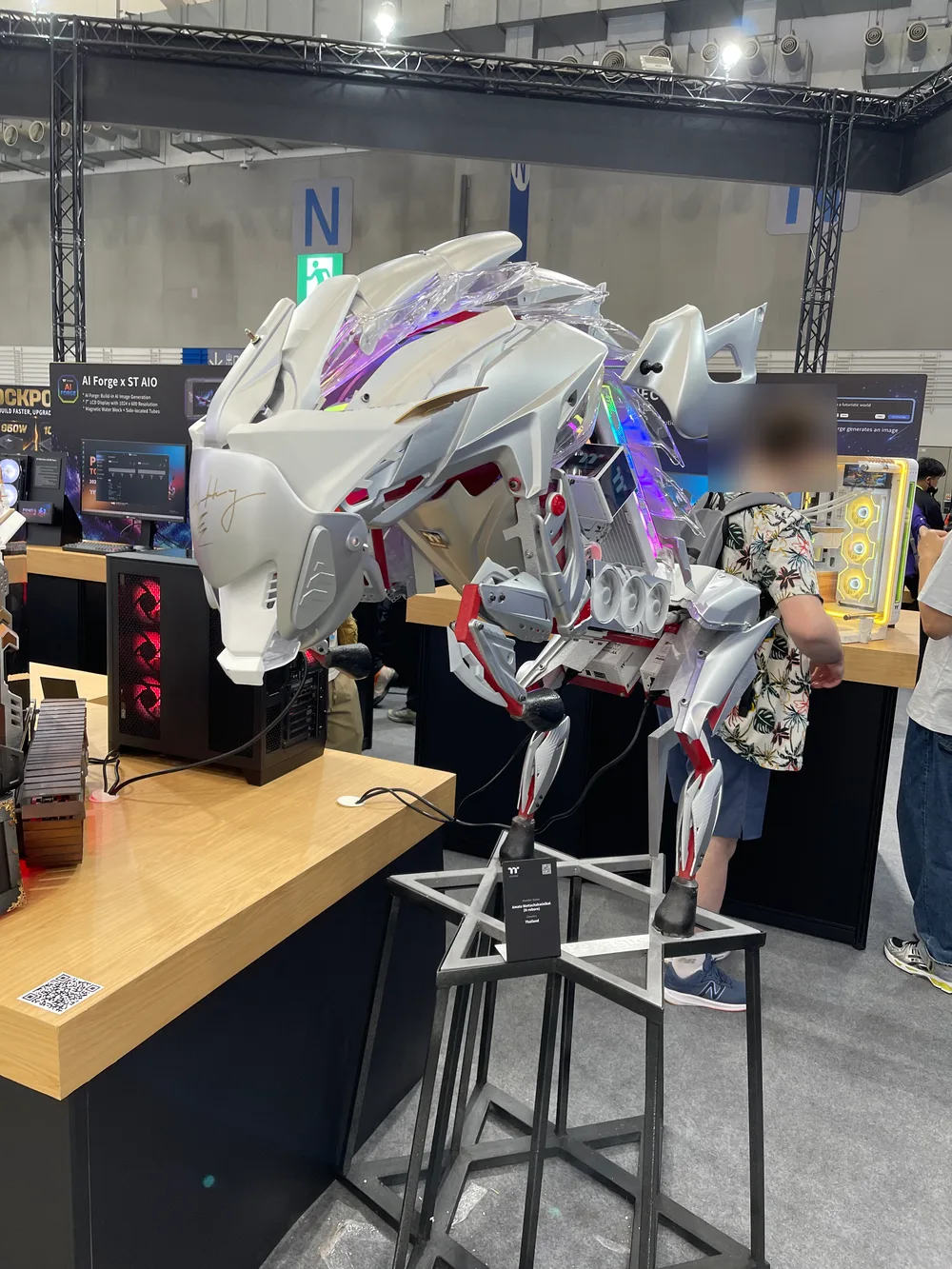
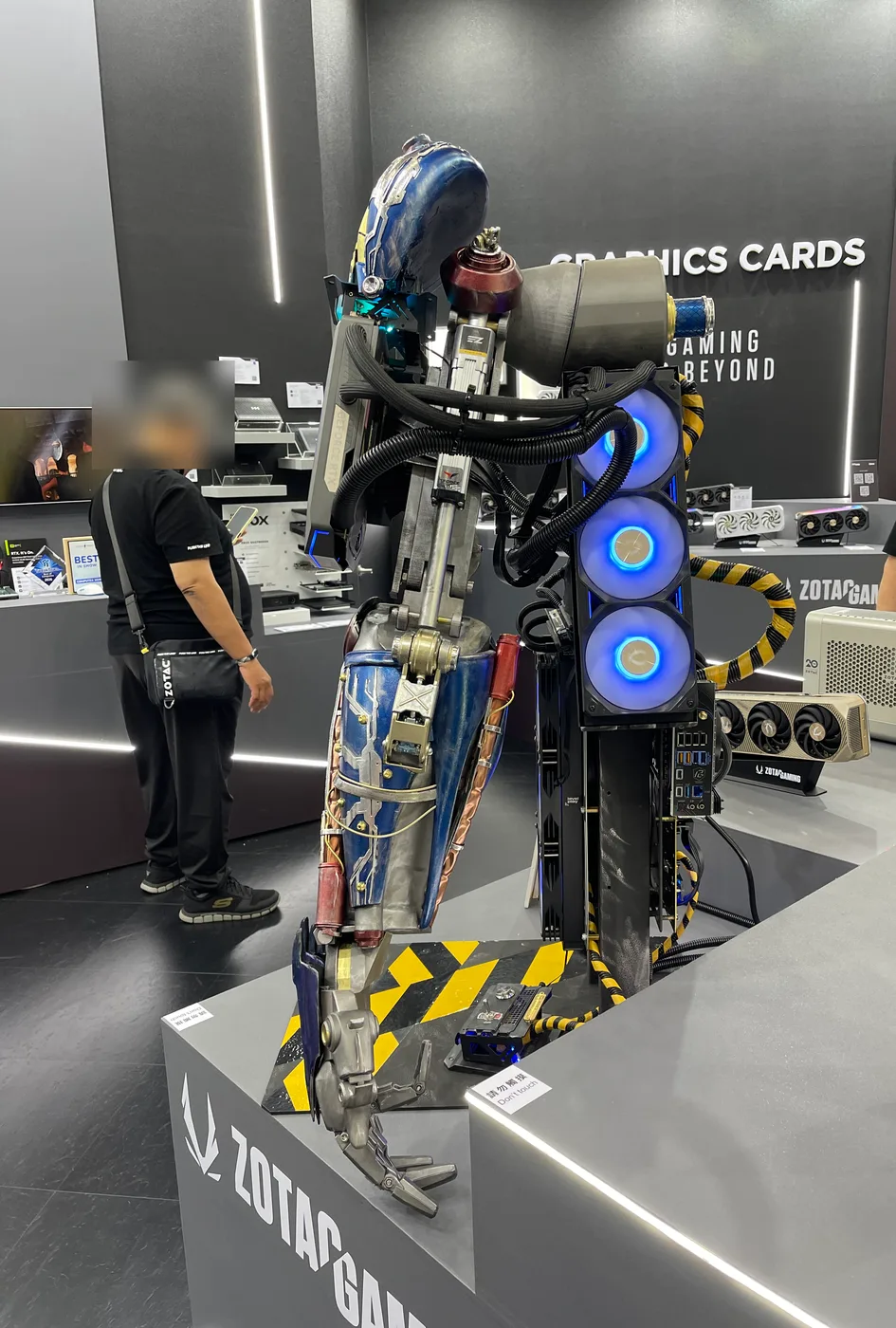
Left: a mechanical-dragon display piece. Right: a mech-shaped gaming PC with liquid cooling and fans inside its body.
TAIROS: more quadrupeds, all doing inspection
First, what is TAIROS?
TAIROS stands for the Taiwan Automation Intelligence and Robot Show. It is organized by the Taiwan Automation Intelligence and Robotics Association and Chan Chao International, and this year it ran in late August at Nangang Exhibition Center Halls 1 and 2.4 It runs at the same time and venue as the Taipei International Industrial Automation Exhibition; together the two shows had 886 exhibitors, 3,506 booths and more than 300,000 visits.5 The official site divides the floor into Industry 4.0, service automation, smart living applications and service robots.4
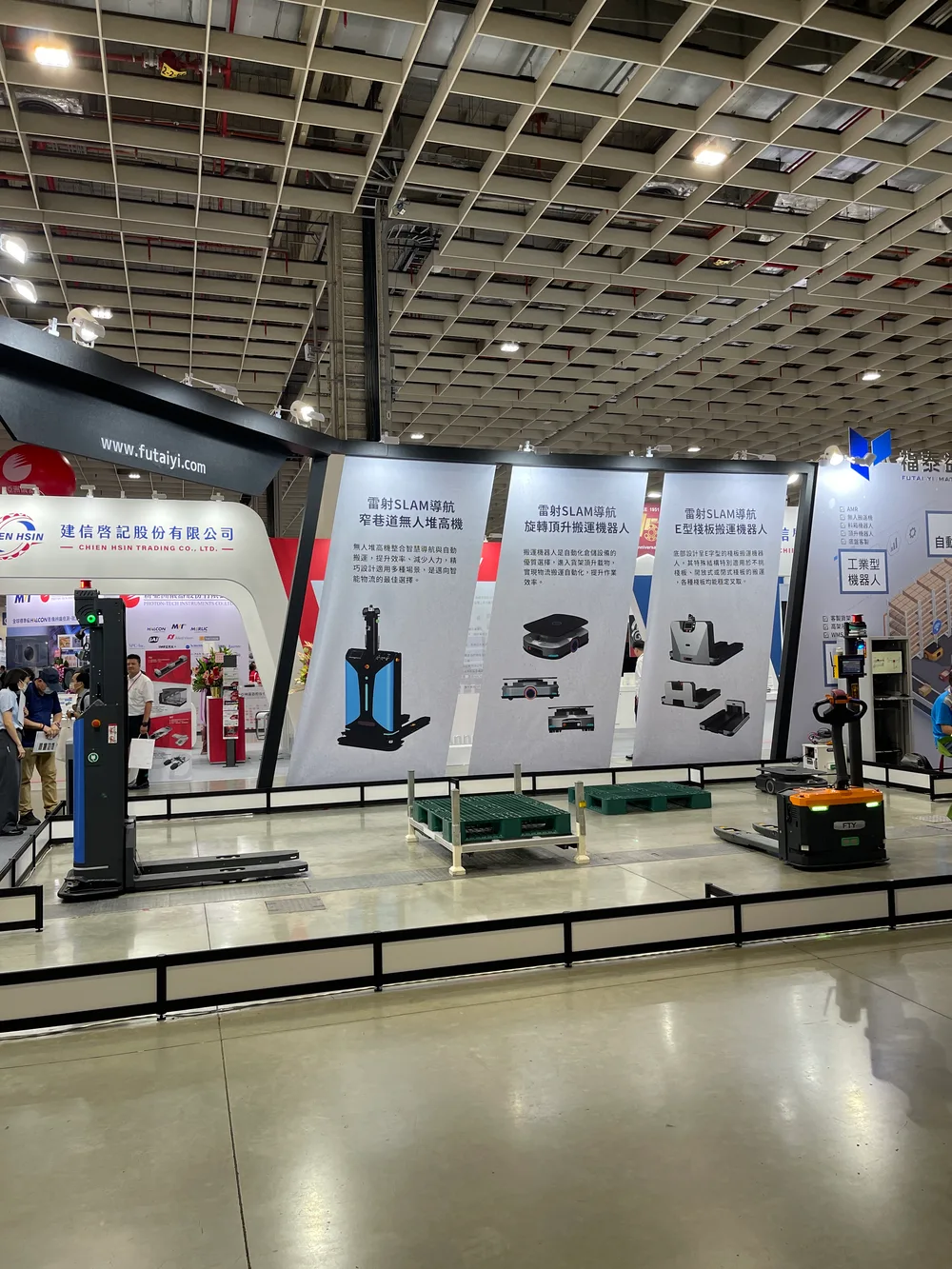
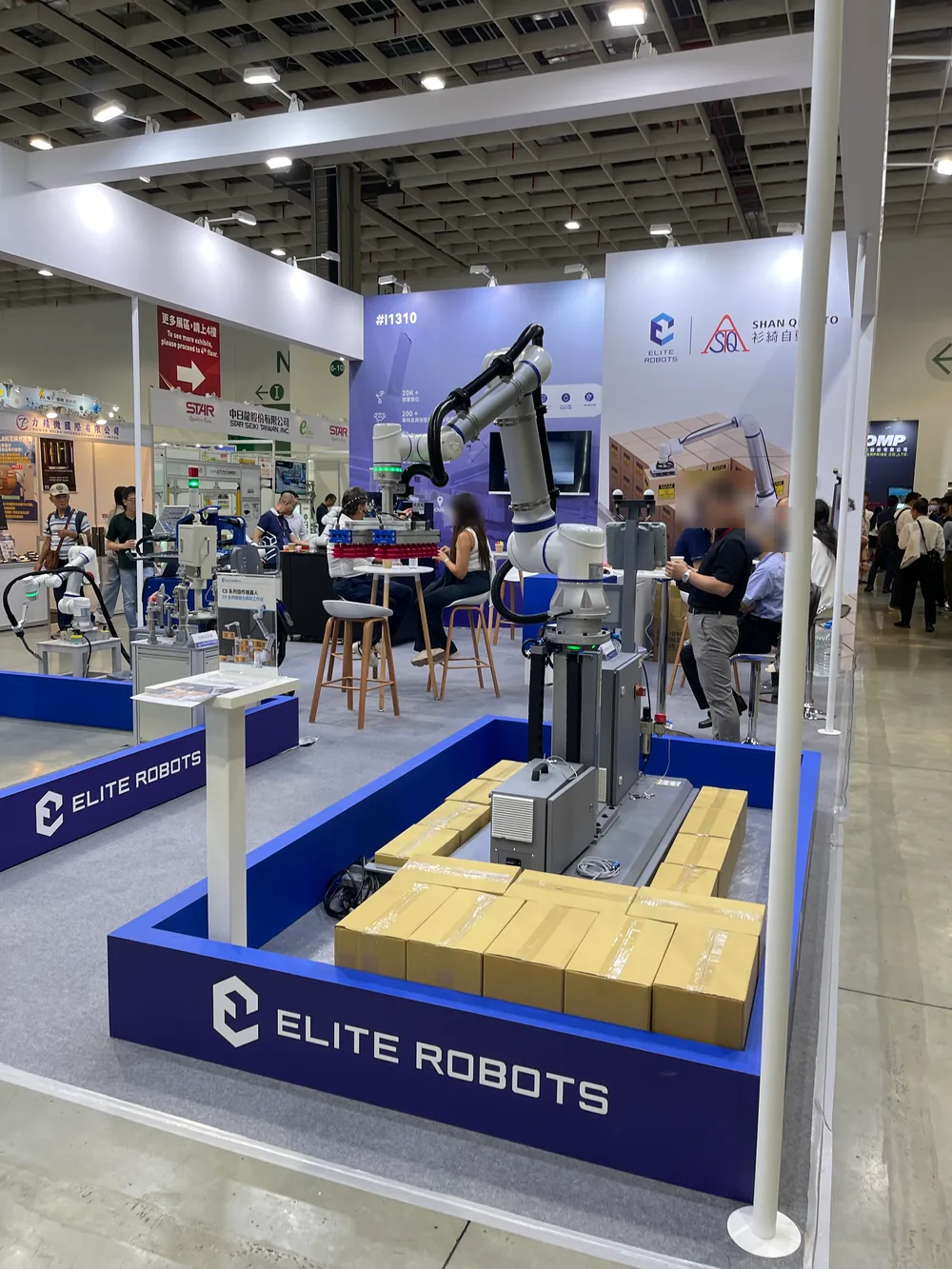
Left: a whole row of self-navigating forklifts and carts. Right: a collaborative arm stacking boxes onto a pallet.
My first feeling at the late-August TAIROS show: there were far more quadrupeds than I expected. Computex had more humanoids; this time it was quadrupeds.
ITRI’s Taiwan-made robot dogs
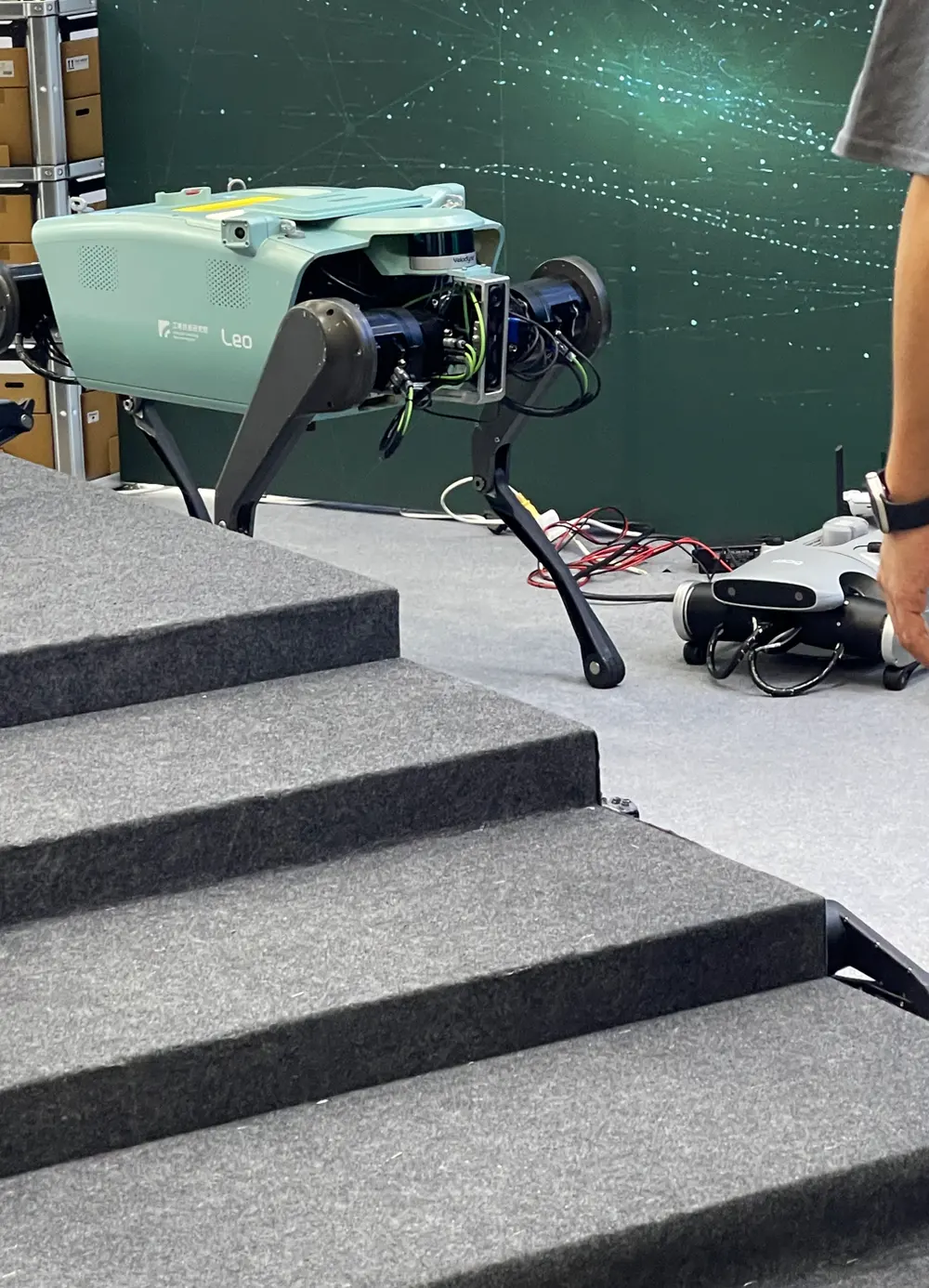
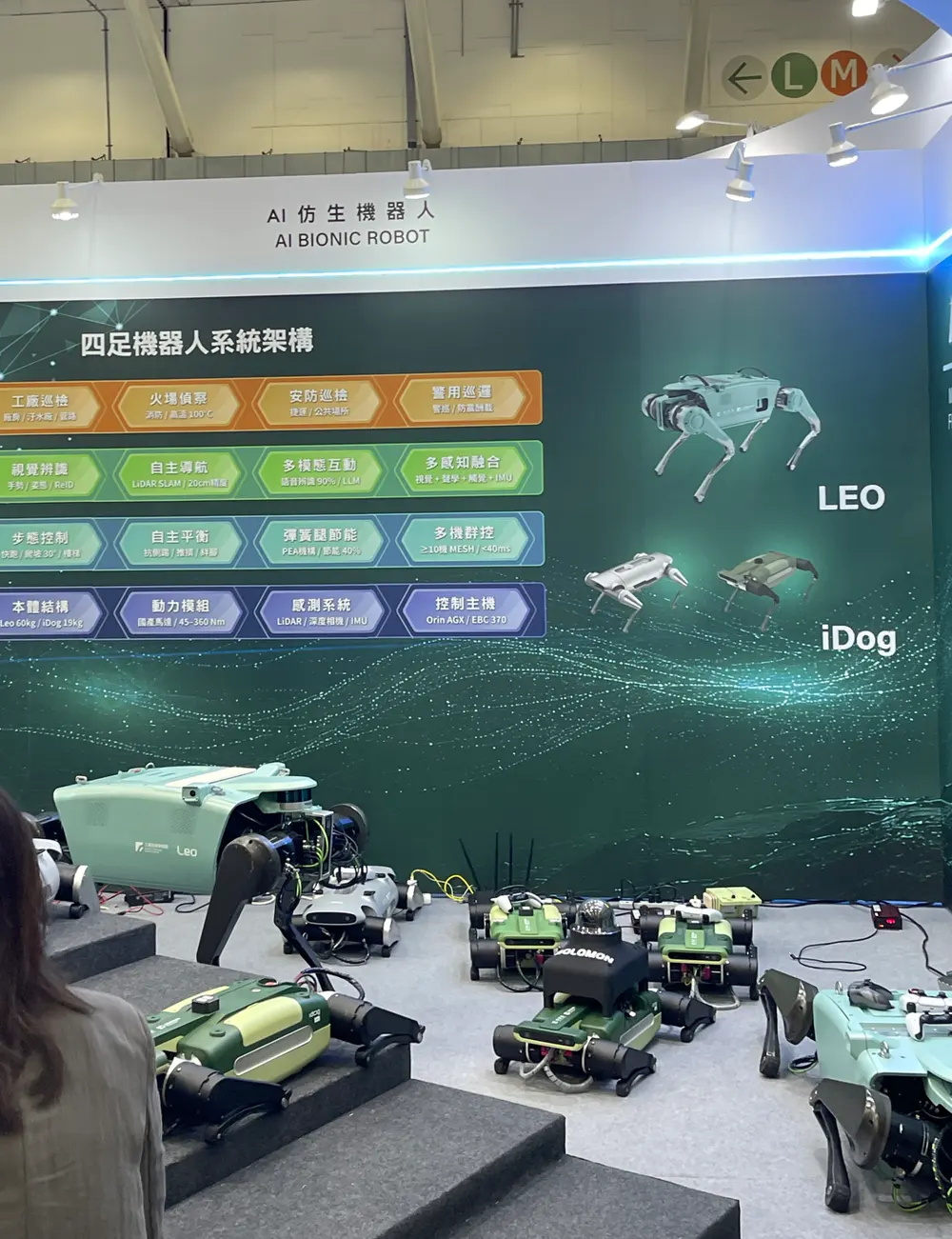
ITRI's AI bionic robots, LEO and iDog, with the system architecture board beside them.
The board listed LEO at about 60 kg and iDog at about 19 kg; gait control for running, 30-degree slopes and stairs, self-balancing against side kicks and pushes, and domestically made motors. The booth even built a flight of stairs for the dog to stand on.
What the quadrupeds shared: inspection, patrol, and a map first
After a lap, I noticed that almost every Taiwanese quadruped was aimed at factory inspection and patrol. The typical setup was a 2D lidar, a Jetson Orin or NX, ROS 2 and SLAM, and they all needed a pre-built map before they could move.
That hit home, because PawAI’s navigation was fundamentally the same: build a map, then go from A to B. It works well in a fixed factory, but it cannot just walk into an unfamiliar place.

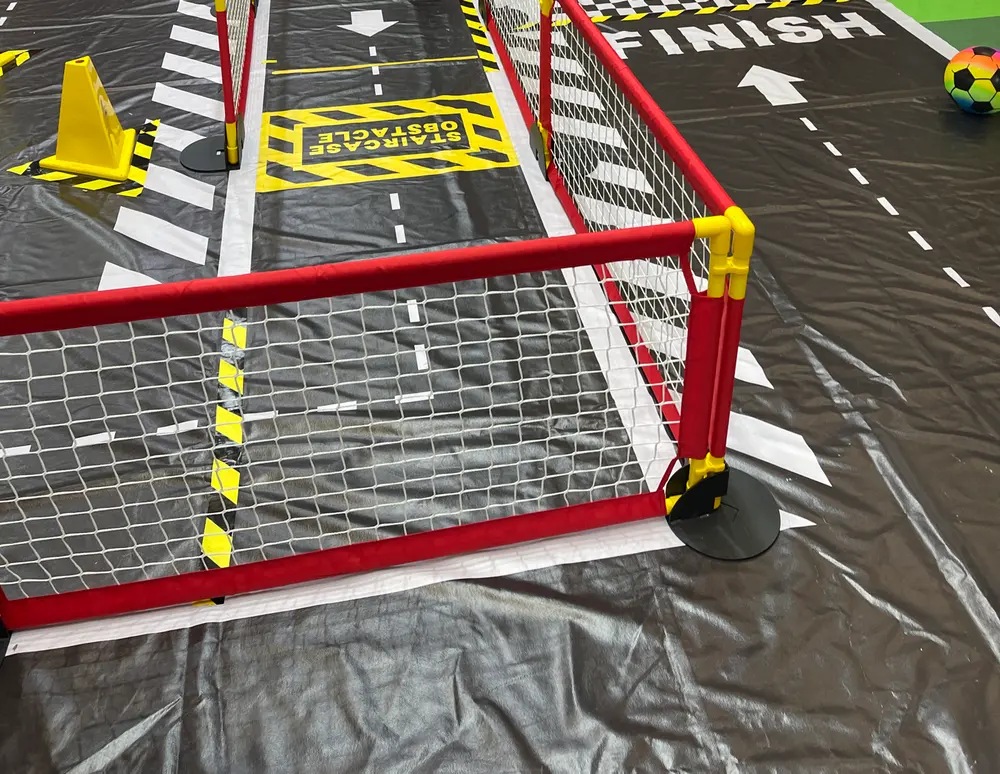
Left: a quadruped control platform, seemingly selling control systems and accessories. Right: a fenced robot dog test course on the floor.
Besides inspection, some booths mounted arms on the robot dogs’ backs, or simply built their own:
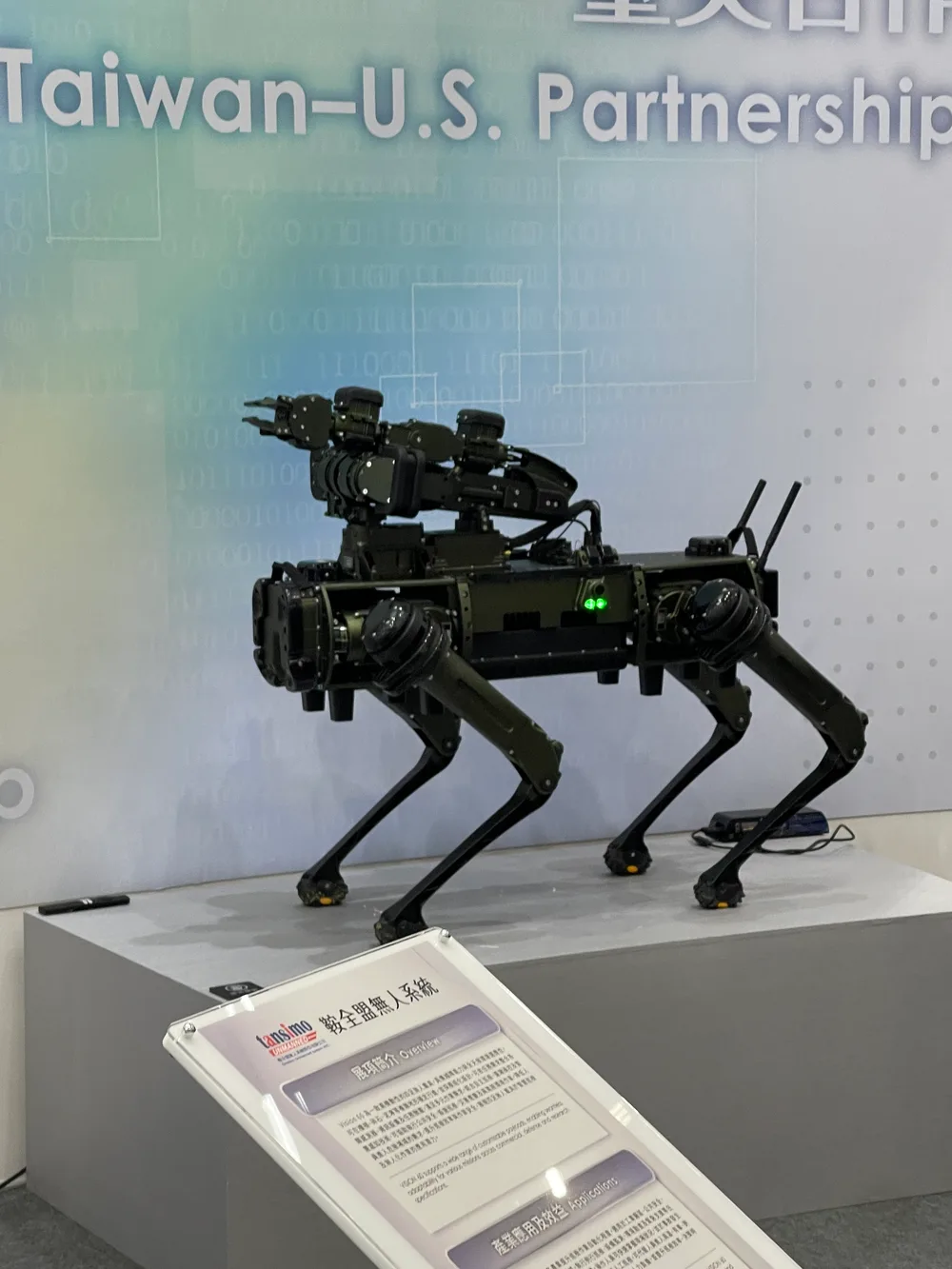
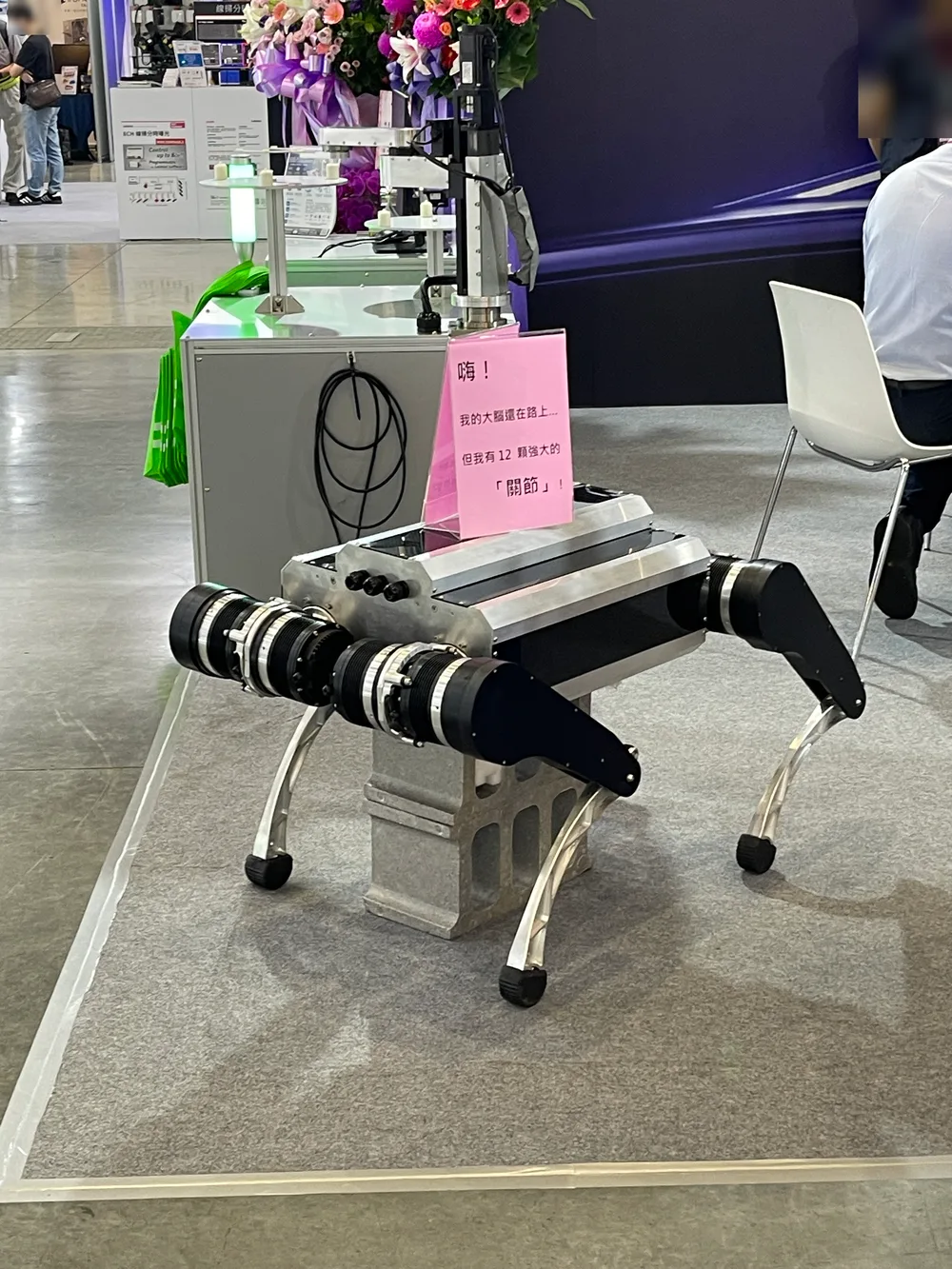
Left: a quadruped with an arm on its back. Right: a homemade quadruped whose note says "Hi! My brain is still on the way…".
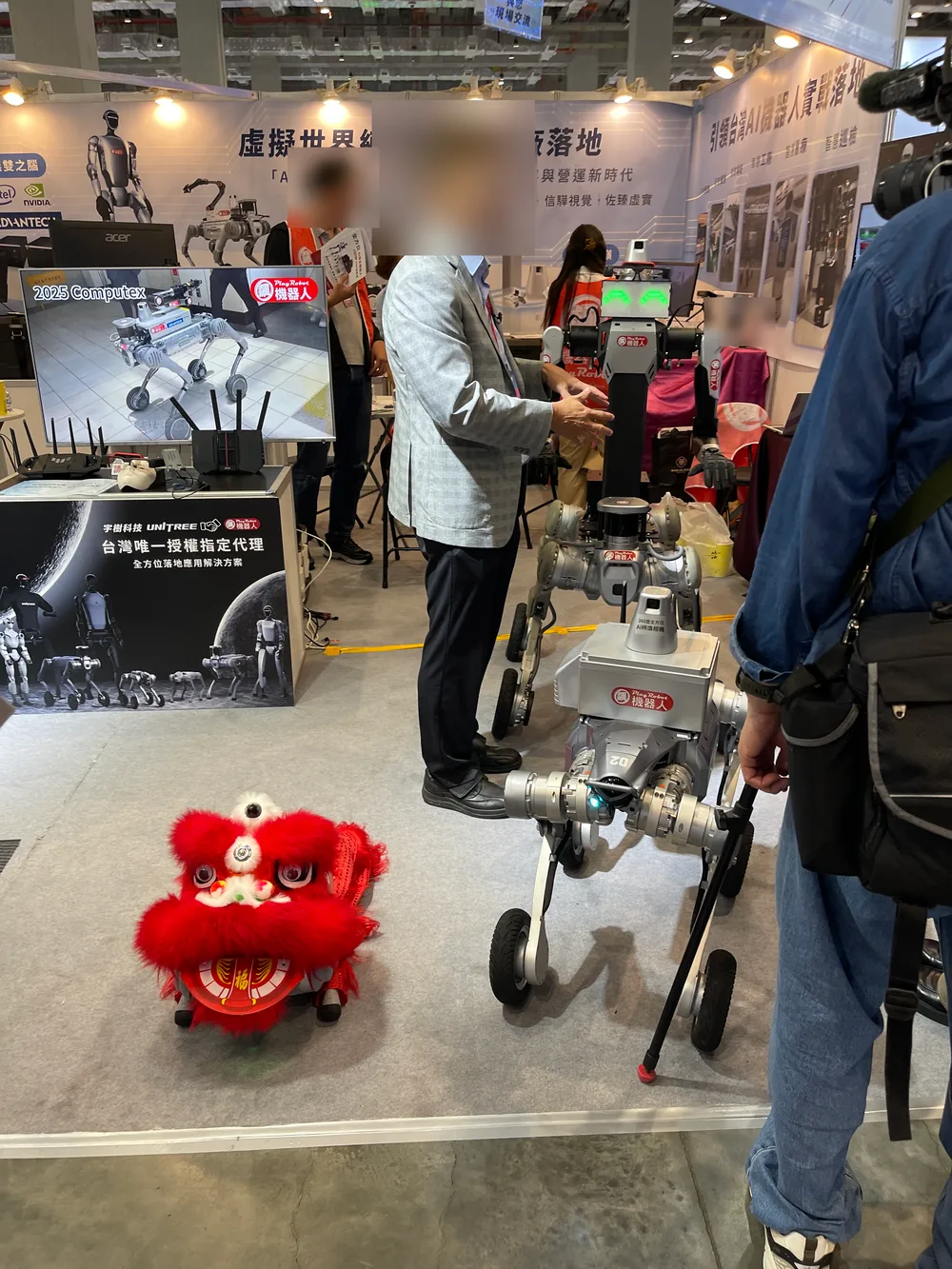
One booth even placed a lion-dance head next to its robot dog.
My takeaway on the floor: plenty of robot dogs, very few applications. Many booths’ message boiled down to “we have robot dogs for sale”.
Wheel-legs: tilt the legs, glide and turn
Another clear trend was wheel-legged robots: many quadrupeds swapped feet for wheels, with legs angled down so they can glide and turn at the same time. That is far more agile than “turn in place, then walk”, and steadier than walking on four legs.
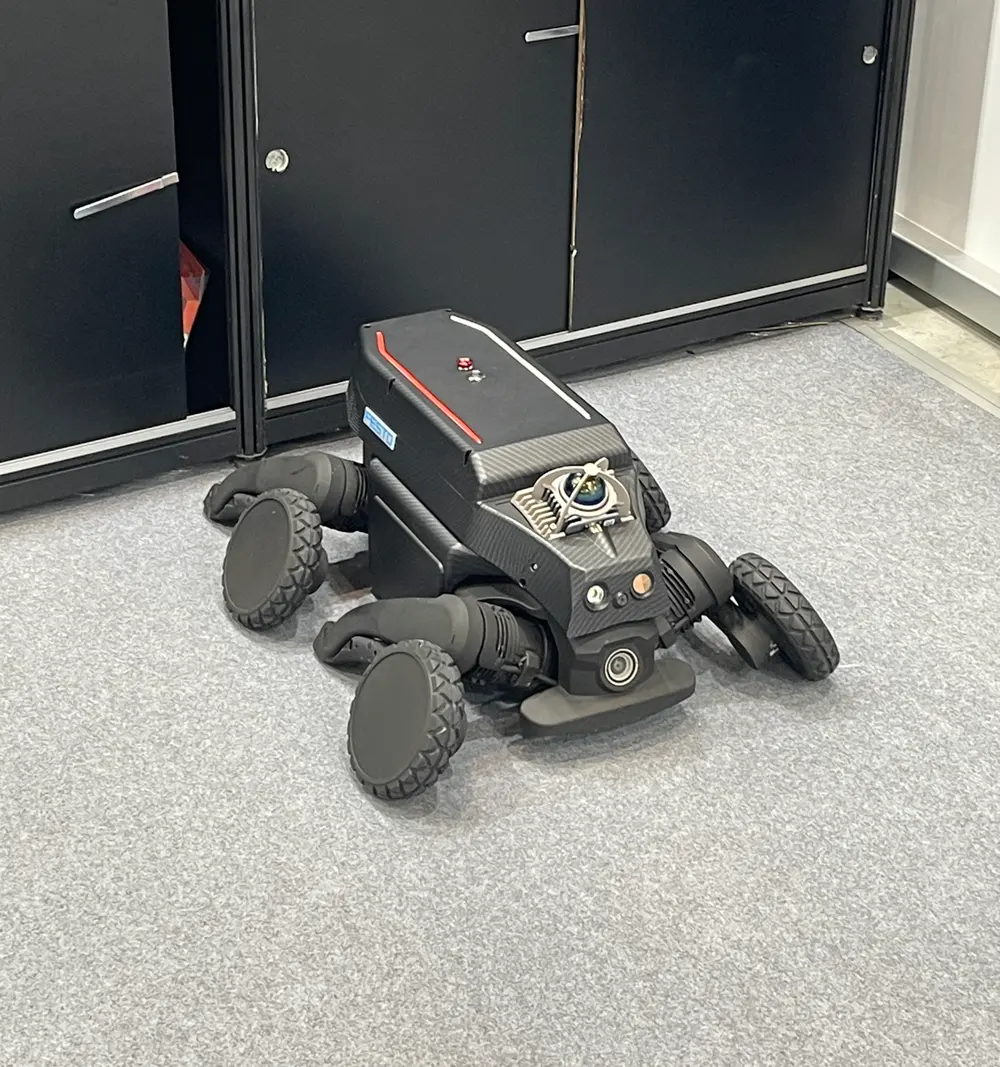
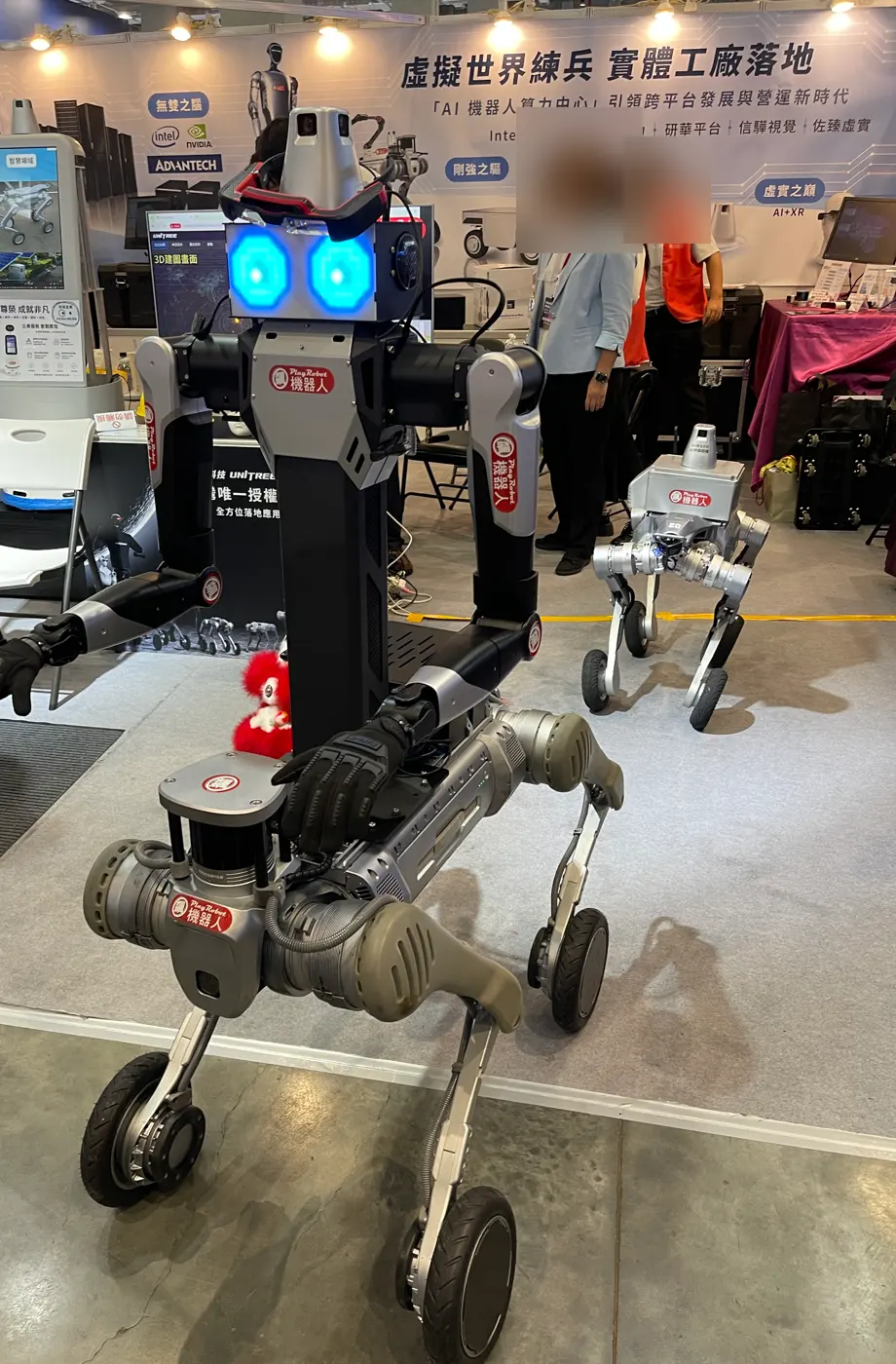
Left: a wheel-legged robot. Right: a two-armed humanoid upper body on a wheel-legged base; the backdrop credits Intel and NVIDIA compute.
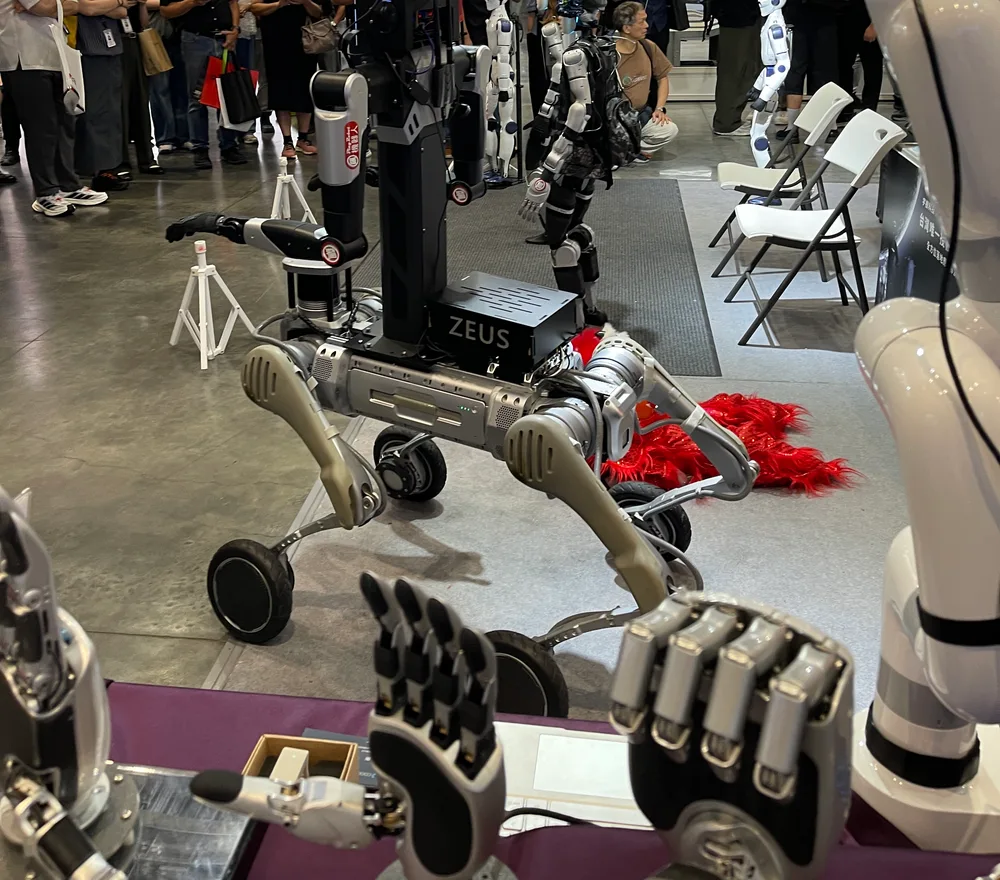
A wheel-legged robot dog with an arm on its back, and two dexterous hands displayed in front.
I heard multi-line lidars cost roughly NT$10,000 per line, and popular models were badly out of stock; for anyone building a quadruped, sensors alone are a real cost.
Big machines: about 80% industrial
About 80% of the show was industrial: components, huge robot arms, warehouse handling and forklifts. A two-story-tall arm picking boxes was one of the few large machines actually moving.
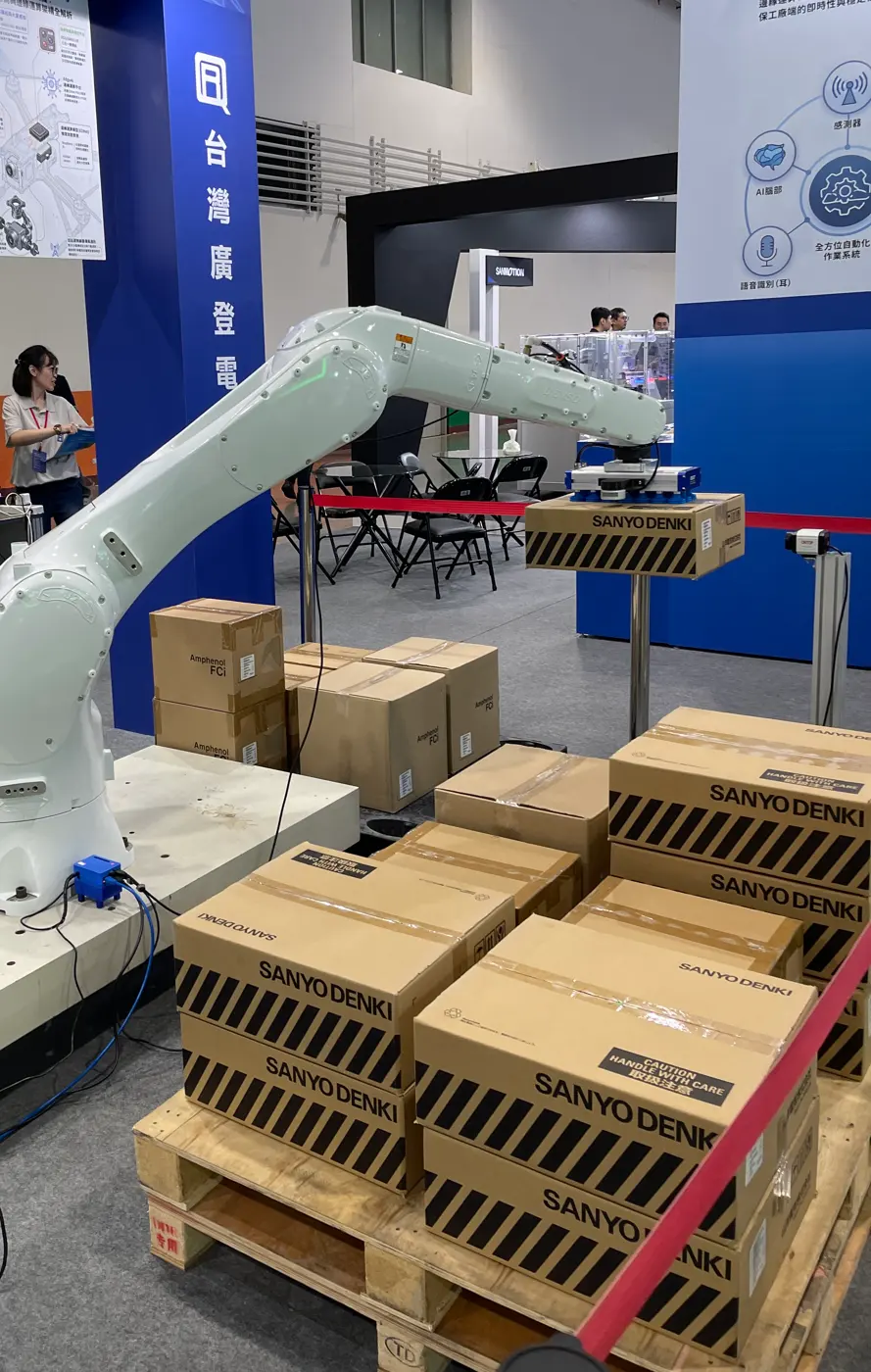
An industrial arm moving boxes.

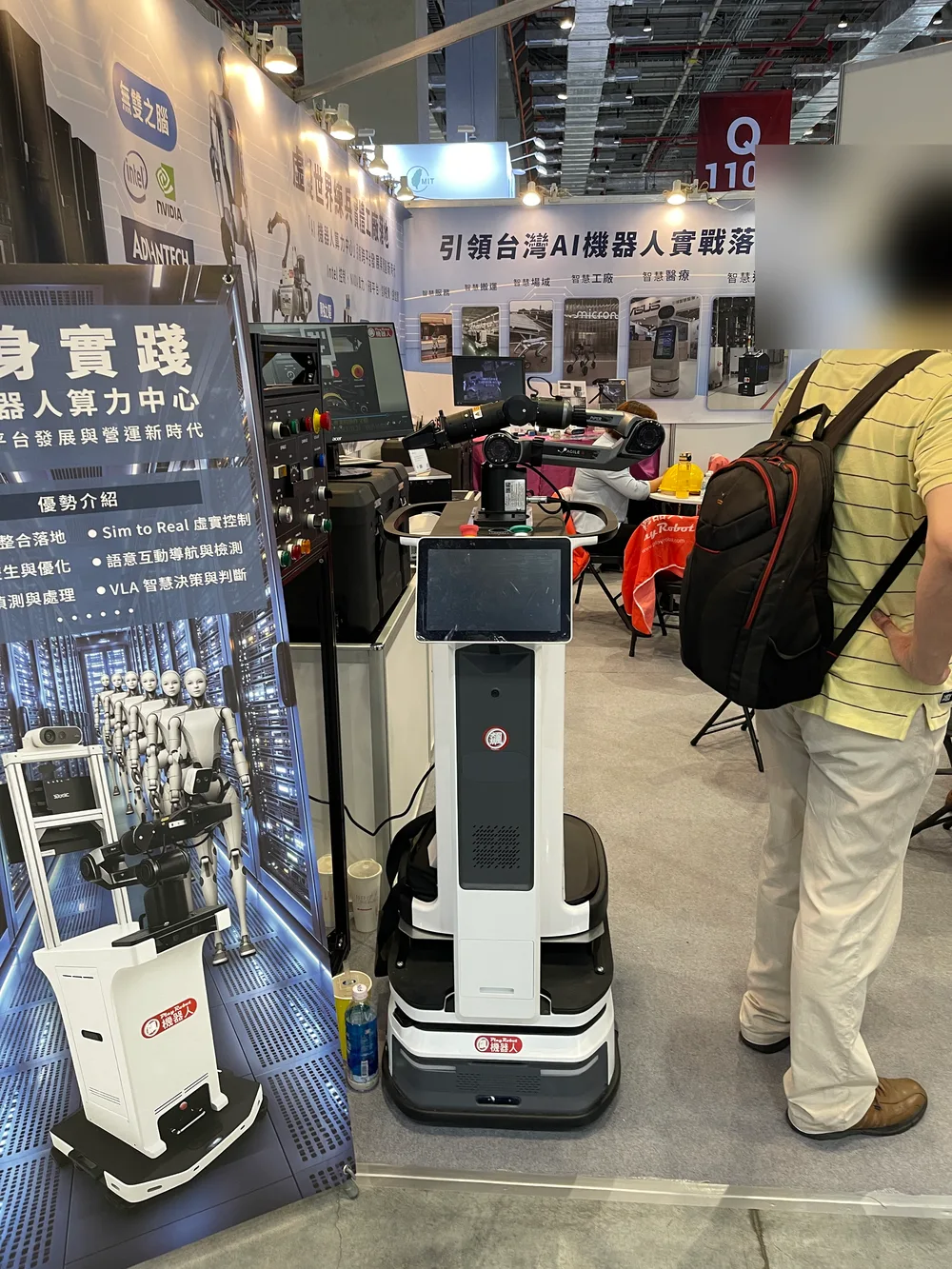
Left: a control platform for dual-arm robots. Right: an "embodied practice" board listing keywords like Sim to Real, semantic interactive navigation and VLA.
A few more things I noted:
- A ping-pong robot arm: really moving, but slow to react, and challengers beat it easily.
- Large humanoids: almost none were demonstrated; they just stood on stage.
- A ramen-making arm: no live demo that I saw.
- One booth’s machine: broken on site and under repair.
- A vision-only handling system: no lidar at all, probably for cargo robots.
The best questions go to student booths
Big-company booths were mostly B2B and focused on sales; technical questions did not get far. Student and university-industry booths were where you could actually talk details.
One university-industry team split navigation and voice interaction across two robot dogs: one focused on moving, the other on interacting. They added heart-rate and temperature sensors, fall detection, and a camera on a 360-degree pan-tilt mount, which was pretty cool. They used the same 2D lidar I did, and upgraded from a Jetson Orin to a larger NX; they also did pure navigation and inspection, again with a map built first.
Another standout was a student’s handmade humanoid robot. It had many features but felt a bit scattered, not yet a product, and movement was not demonstrated; still, I had never seen a handmade humanoid in Taiwan built to that level.
Looking back at PawAI
After both shows, I sorted what was really moving from what just sat there:
| Seen moving with my own eyes | Static, or no demo seen | |
|---|---|---|
| Computex | Humanoid finding and fetching an object; live recognition screens | (nothing specific noted) |
| TAIROS | Ping-pong arm (slow); two-story box-picking arm | Large humanoids, ramen arm, most quadrupeds, a machine under repair |
Three takeaways:
- Architecture is not the difference. The voice, vision, LLM and navigation stack at many booths was almost identical to PawAI’s. Wiring these modules together is no longer rare.
- Show floors can’t answer the most important questions. Booth videos only include successes; nobody tells you the failure rate, or whether it works in an unfamiliar place. That is exactly what I wanted to know.
- Applications are the bottleneck. Quadrupeds cluster on inspection, humanoids on factory handling, and everyone can do interaction. What’s rare is “take one concrete scenario and make the capability good enough to use”.
That is almost exactly the conclusion of my PawAI retrospective: multimodal integration is not the goal on its own; it has to serve a scenario before it can be tested, improved and actually used.
Honestly, of the two shows I liked Computex more: the humanoid find-and-fetch demo was genuinely strong. But TAIROS showed me more of what is still unsolved, and it reminded me where to think next.
Footnotes
-
COMPUTEX official press release: https://www.computextaipei.com.tw/en/news/8F914C77B6AF77A5/info.html ↩
-
United Daily News (udn.com): https://udn.com/news/story/7240/9548529 ↩
-
COMPUTEX official post-show results: https://www.computextaipei.com.tw/zh-tw/media/516E2AE597DC7FB1/info.html ↩
-
Chan Chao International show page: https://www.chanchao.com.tw/expoDetail.asp?id=ROBOT2026 ↩ ↩2
-
Economic Daily News: https://money.udn.com/money/story/5639/9716563 ↩